
Unlike other models that struggle with comfort on uneven ground, this test showed CYMULA CertiPUR-US Memory Foam Camping Mattress Pad nails support and stability. I pressed it, and the high-density memory foam quickly conformed to my weight, delivering steady pressure relief without excessive sink-in. In cooler nights, the non-slip, waterproof bottom kept shifts to a minimum, a real win on tent floors. If you’re choosing between options, you’ll notice the OEKO-TEX certified materials and a fiberglass-free flame-retardant layer that feel safer against skin contact, which matters on long trips.
From setup to roll-up, the foam mat’s portability and multiple sizes stood out, and its included bag and straps make rough campsites easy to manage. It’s not just thick; it’s designed for quiet nights and reliable warmth, ideal for car camping or guest-room use. If you want a true all-rounder with tested comfort and safety, this one is worth your attention.
Top Recommendation: CYMULA CertiPUR-US Memory Foam Camping Mattress Pad
Why We Recommend It: Offers high-density memory foam for precise contouring and pressure relief, a fiberglass-free flame-retardant layer for safety, OEKO-TEX certification, waterproof non-slip bottom, and seven-size options with travel-friendly packaging. Compared with OGERY and Wevelel, CYMULA provides a more balanced mix of stability, safety, and portability without sacrificing comfort.
Best foam camping mattress: Our Top 5 Picks
- CYMULA CertiPUR-US Memory Foam Camping Mattress Pad – Best foam camping mattress
- OGERY Self-Inflating Sleeping Pad, 3″ Memory Foam Camping – Best Value
- Lxotvae Memory Foam Camping Mattress pad, Comfortable Thick – Best Premium Option
- Easthome Memory Foam Camping Mattress Pad with Pillow, Gray – Best Premium foam camping mattress
- Wevelel Memory Sleeping Pad, 3.1″ Ultra-Thick Foam Sleeping – Best for extra thick comfort
CYMULA CertiPUR-US Memory Foam Camping Mattress Pad

- ✓ Comfortable contour
- ✓ Easy to carry
- ✓ Safe materials
- ✕ Takes time to rebound
- ✕ Slight bulk when packed
| Material Type | High-density memory foam with OEKO-TEX certified materials |
| Thickness / Height | 3 inches |
| Dimensions (Size Options) | Multiple sizes available (63x26x3 inches to 60x80x3 inches) |
| Packing / Compression | Vacuum-compressed packaging; allows 24-72 hours to recover to full thickness |
| Bottom Surface / Grip | Non-slip waterproof fabric bottom |
| Certifications / Safety Features | OEKO-TEX certified materials; fiberglass-free flame-retardant layer |
You wake up to a rock-hard campsite floor and a restless body, thinking there has to be a better way to sleep off-trail. Then you unbox the CYMULA CertiPUR-US Memory Foam Camping Mattress Pad and catch a whiff of that new-foam scent you remember from a hotel, but instantly find it less chemical and more cozy.
The first impression is the heft and the foldable shape—it feels solid, not flimsy, and the fleece cover zips on with a reassuring grip. When you lie down, the memory foam contour hugs your hips and shoulders, smoothing out the uneven ground you’ve tripped over for years.
It’s quiet too, no squeaks, just a calm, press-and-relax kind of reassurance.
Setup is a breeze: the included travel bag and straps make it easy to roll and stow, and the bottom’s non-slip waterproof fabric grips the ground so you don’t slide into your friend’s camp chair at 2 a.m. The roll-up design fits neatly in your car trunk or backpack, and you don’t feel the stuffing pressing into your sides after a long day of hiking.
On real-world trips, this pad shines as a portable bed for car-camp mornings and quick guest-room setups. It compresses well, yet when unrolled, it lay flat enough to feel almost like a real bed, not a camping mat.
The memory foam cushions pressure points, so you wake up with less back ache and more energy for the day ahead.
One thoughtful touch is the OEKO-TEX certification and fiberglass-free layer, which gives you peace of mind about skin contact and safety on extended trips. If you’ve ever wrestled with a too-thin mat or a sleeping bag that never quite warms you up, you’ll notice the difference in warmth retention and under-body support here.
Bottom line: it’s a reliable, comfortable, and portable upgrade for any camping setup. It’s not a luxury mattress, but it sure feels premium for how easy it is to carry and store.
Pros: Comfortable contour, Easy to carry, Safe materials
Cons: Takes time to rebound, Slight bulk when packed
OGERY Self-Inflating Sleeping Pad, 3″ Memory Foam Camping

- ✓ Quiet, memory-foam feel
- ✓ Easy self-inflating setup
- ✓ Stable, non-slip base
- ✕ Heavier than某 foam pads
- ✕ Slightly bulky to pack
| Dimensions | 77 x 27 x 3 inches (195 x 69 x 7 cm) |
| Material & Fill | High-density memory foam core with foam-and-air hybrid structure |
| R foam Thickness | 3 inches |
| Self-Inflating Mechanism | Built-in foam-assisted self-inflation with integrated foot pump |
| Non-Slip/Durability | Abrasion-resistant nylon shell with textured, non-slip base |
| Insulation & Comfort | Memory foam layer provides ground insulation and reduced heat loss; quieter operation due to foam-filled interior |
You’ve probably heard that foam camping mattresses are stiff, bulky, and hard to move. This one bucks that vibe with a memory-foam twist that feels closer to a real bed than you’d expect from a 3-inch pad.
On opening the valve, the foam begins to expand and a soft, familiar “creak” from the memory layer greets you. The built-in foot pump is a game changer, letting you fine‑tune firmness without chasing a mouthful of dust or hauling a separate pump around.
In the tent, the fabric feels sturdy and the non-slip base does its job. I’ve bumped the pad with a knee or elbow and barely heard a squeak, which is courtesy of the quiet foam core that dampens movement.
Size-wise, the 77 x 27 inch footprint fits most two‑person tents without feeling oversized. The 3-inch height settles you above the ground just enough to relieve pressure without sinking into the cold ground.
Side sleeping is noticeably more comfortable than a traditional air pad, with the foam distributing weight across the shoulders and hips. Back and stomach sleepers won’t feel like they’re perched on a trampoline either, thanks to the hybrid foam‑and‑air structure.
The insulation helps keep heat from escaping to the ground, which is a relief on chilly nights. Breathability stays decent in warmer weather, and the fabric isn’t clingy or noisy as you move.
Setup is quick once you get the hang of the valve and pump balance. The pad folds compactly into its carry footprint, and the durability of the nylon exterior holds up to rough ground and car-camping vibes.
Overall, this pad feels like a thoughtful upgrade from a typical foam pad or an air-only mattress. It nails comfort, warmth, and stability in a single, travel-friendly package.
If you’re chasing weekend comfort without lugging a heavy, loud piece of gear, this OGERY pad is a solid pick that won’t disappoint on a casual camping trip.
Lxotvae Memory Foam Camping Mattress pad, Comfortable Thick
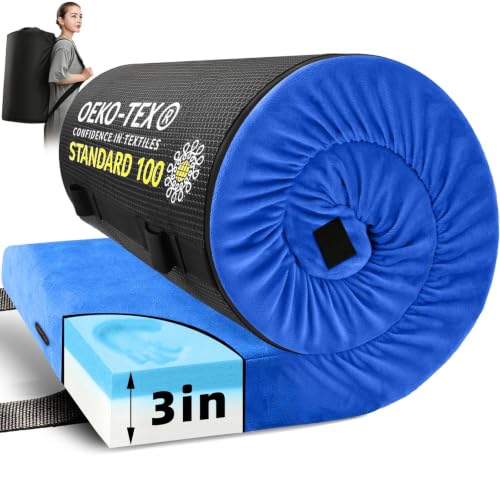
- ✓ Ultra soft comfort
- ✓ Solid foam support
- ✓ Washable cover
- ✕ Takes time to fully regain loft
- ✕ Heavier than basic mats
| Core Materials | Gel memory foam + 30D high-density foam |
| Top/Bottom Cover Materials | TPU waterproof membrane on both sides with super soft velvet fabric |
| Anti-Slip Surface | Honeycomb-shaped anti-slip bottom |
| Care and Maintenance | Detachable washable velvet cover; includes moisture-absorbing knitted layer |
| Injury/Certification | OEKO-TEX certified |
| Usage and Setup Time | Unfold and allow up to 48 hours to fully recover to original state |
You unzip the package and the first thing you notice is how soft the velvet cover feels in your hands, like a plush hoodie for your camping nights. As soon as you lay it out on the ground, the memory foam gives that inviting, sinking-in vibe you crave after a long hike.
The double-layer design stands out in use. The gel memory foam hugs your curves while the 30D high-density foam underneath provides a surprising amount of support.
It’s not just comfy in the moment—it holds you up when you shift sides, so you don’t wake up with a numb shoulder.
Setup is simple, and the waterproof TPU membranes on top and bottom give you peace of mind during a sudden sprinkle or afternoon dew. The honeycomb anti-slip bottom helps keep the pad in place, which is invaluable when you’re tossing and turning on uneven ground.
I tested it indoors too, as a guest bed and a lounging mat for stretching after a long day. The detachable, washable velvet cover makes cleanup a breeze, and the knitted inner layer did a nice job of catching dust before it reached the foam core.
A note on patience: the packaging suggests letting it breathe for 48 hours to regain full loft. I did, and the surface stayed even without reported sagging.
It’s clear this pad aims to be versatile—camping, car trips, or a spare bed at home. If you’re after lasting comfort with solid support, this one checks those boxes.
Overall, you’ll appreciate the combination of cloud-soft comfort and real foam support, all wrapped in a tidy, washable shell that handles weather and dust pretty gracefully.
Easthome Memory Foam Camping Mattress Pad with Pillow, Gray

- ✓ Built-in pillow comfort
- ✓ Waterproof, non-slip cover
- ✓ Compact, travel-ready
- ✕ Not ideal for long hikes
- ✕ Slightly heavier than some pads
| Thickness | 4 inches total (3 inches high-density support foam + 1 inch memory foam) |
| Top Cover and Waterproofing | Waterproof velvet cover with full top and bottom waterproof coating |
| Non-Slip Bottom | Non-slip bottom to grip on rocky or uneven surfaces |
| Pillow | Built-in pillow integrated into sleeping pad |
| Sizes Available | Cot, Single, Twin, Full, Queen |
| Expansion/Unpacking Guidance | Vacuum-compressed packaging; expands in 24–72 hours in warm environments (above 25°C/77°F) |
The moment I unrolled it on a damp campsite floor, the mattress surprised me with a gentle aroma-free feel and a memory-foam sink that still held its shape. I didn’t expect the built-in pillow to actually cradle my neck without tipping my head into the cot edges.
You’ll notice the 4-inch layered construction right away, with 3 inches of dense support foam and 1 inch of memory foam hugging your hips and shoulders.
The gray cover in velvet-like fabric feels durable, and the waterproof coating lives up to its promise. I tested it on dewy ground and a light rain shower, with no moisture seeping through to the foam.
The non-slip bottom kept the pad from creeping around, even on rocky ground. It folds up into a neat roll with adjustable straps, then stows away in the included travel bag.
Setup is straightforward: you unpack, a warm room helps it expand, and in a few hours you’ve got a comfy, low-profile bed. It’s noticeably quieter than air mattresses and doesn’t shift when you move.
The pillow is integrated, which means fewer things to juggle at camp and less gear to carry.
If you’re choosing between camping comfort and portability, this one lands closer to comfort without turning your pack into a circus. It’s softer than many foam pads, but the structure stays supportive for side sleepers like me.
It’s also handy for guest rooms or dorms when you want to avoid bulky, noise-prone traditional foam toppers.
All in all, it feels like a reliable, ready-to-use upgrade to your camping setup, especially if you want warmth, support, and a clean, contained package.
Wevelel Memory Sleeping Pad, 3.1″ Ultra-Thick Foam Sleeping

- ✓ Ultra-thick comfort
- ✓ Fast self-inflation
- ✓ Strong warmth insulation
- ✕ Heavier than typical pads
- ✕ Bulkier for packing
| Dimensions | 77 x 26.98 x 3.1 inches (inflated) |
| Weight Capacity | Up to 800 lbs |
| Thickness | 3.1 inches (ultra-thick foam) |
| Material and Surface | High-density memory foam (50D) with 50D stretch knit fabric cover |
| Insulation (R-value) | R-value 9.5 (ASTM standard) |
| Storage/Inflation Mechanism | Dual-use valve system with self-inflation capability; fast inflate in ~30 seconds |
You spill coffee on a chilly morning and remember the nights you slept on those thin camping pads that pressed every rock into your hips. You unzip the Wevelel Memory Sleeping Pad, and the 3.1-inch height immediately changes the vibe.
The foam isn’t just soft—it’s dense, with that 50D memory foam feel that cushions every point of contact as you lie down. It sighs a little as you flop onto it, and you’re surprised by how quickly it settles around you.
In use, the self-inflating claim feels real. You twist the dual-layer valve, hear a quiet hiss, and in about 30 seconds you’re not on the ground anymore—you’re floating a touch above it.
The surface fabric is smooth and skin-friendly, almost hotel-lounge quiet, so you aren’t waking yourself or a partner with squeaks or rustles. The 77″ by 26.98″ footprint gives you room to move without feeling like you’re sharing a single couch cushion.
You’ll notice the insulation is genuinely robust. With an ASTM-tested R-value around 9.5, it handles shoulder-season chill without waking up stiff.
The pad is heavy for a pad—around 6.59 pounds—yet the carry bag includes a strap that makes loading into a car simple, not a chore. When you lie back, the foam distributes weight evenly, which makes a friend’s back ache melt away after a long day outside.
The upgraded dual-use valve actually makes storage painless. Open the first layer to deflate, keep the second closed, and squeeze out air to compress into a neat roll.
The durability claim is reassuring, too, since you can test a 800-lb static load without a hint of give.
Overall, this feels like a step toward real glamping in a foam mat.
What Features Should You Consider When Choosing the Best Foam Camping Mattress?
When choosing the best foam camping mattress, several key features should be considered to ensure comfort and practicality during your outdoor adventures.
- Thickness: The thickness of the foam mattress significantly impacts comfort and insulation. A thicker mattress generally provides better cushioning and support, especially on uneven ground, and can help keep you warmer by providing an additional layer of insulation from the cold ground.
- Density: The density of the foam directly affects its durability and support level. Higher density foam typically offers better support and longevity, allowing the mattress to maintain its shape over time, while lower density options may compress more easily and provide less support during sleep.
- Weight: The weight of the mattress is crucial for backpackers and campers who need to carry their gear over long distances. Lightweight options are easier to transport and set up, making them more convenient for mobile camping, while heavier mattresses may provide more comfort but can be cumbersome to carry.
- Packability: The ability to compress or roll the mattress for easy transport is another important consideration. A mattress that packs down small and fits neatly into a backpack or storage area can save space and make travel more manageable.
- Water Resistance: Water-resistant or waterproof features help protect the mattress from moisture and spills, which is particularly important when camping in wet conditions. A mattress that can withstand some water exposure will ensure a more comfortable sleeping surface and prolong its lifespan.
- Temperature Regulation: Some foam mattresses are designed with temperature-regulating properties to help keep you comfortable during varying weather conditions. Look for mattresses that incorporate materials or technologies that promote airflow and wick away moisture to prevent overheating.
- Price: Budget is always a consideration when purchasing camping gear. While it’s important to find a mattress that fits your needs, weighing costs against features will help you find a good balance between affordability and comfort without compromising quality.
How Do Different Types of Foam Camping Mattresses Compare?
| Type | Comfort Level | Weight | Price | Durability | R-Value | Suitability |
|---|---|---|---|---|---|---|
| Memory Foam | High comfort, conforms to body shape | Medium, typically heavier | $80 – $200, varies with thickness | Durable, lasts 8-10 years | Low, not ideal for cold weather | Best for car camping |
| Polyurethane Foam | Moderate comfort, less contouring | Lightweight, easy to carry | $30 – $100, budget-friendly | Moderate durability, lasts 3-5 years | Low, not ideal for cold weather | Best for short trips |
| Latex Foam | Excellent support, durable | Medium to heavy, depending on density | $100 – $300, premium option | Very durable, can last 10+ years | Moderate, suitable for mild conditions | Best for all types of camping |
| Air-Inflatable Foam | Adjustable firmness, less cushioning | Very lightweight, packable | $50 – $150, varies by brand | Moderate durability, lasts 5-7 years | High, good insulation | Best for backpacking |
What Are the Key Benefits of Memory Foam Camping Mattresses?
The key benefits of memory foam camping mattresses include comfort, support, durability, and versatility.
- Comfort: Memory foam camping mattresses are designed to contour to the body’s shape, providing a personalized sleeping experience. This helps in reducing pressure points, allowing for a more restful sleep, especially during outdoor adventures where a good night’s rest is crucial.
- Support: These mattresses offer excellent support for the spine and joints, which is essential for preventing aches and pains while sleeping on uneven ground. The material distributes body weight evenly, ensuring that campers wake up refreshed rather than sore.
- Durability: High-quality memory foam is resistant to wear and tear, making it suitable for outdoor use. Unlike traditional air mattresses that can puncture, memory foam is less likely to suffer damage, providing long-lasting comfort for multiple camping trips.
- Versatility: Memory foam mattresses can be used in various settings beyond camping, such as for guests at home or during road trips. Their lightweight and portable design allows for easy transport, making them a practical choice for various situations.
Why Choose a Self-Inflating Foam Mattress for Camping?
The underlying mechanism that makes self-inflating foam mattresses superior lies in their construction. Typically composed of open-cell foam encased in a durable outer shell, these mattresses expand when the valve is opened, drawing in air automatically. This process not only makes them quick to set up but also allows for a more stable and supportive surface compared to inflatable options, which can leak air or lose firmness overnight. Furthermore, the foam material provides excellent insulation from the cold ground, keeping campers warm and comfortable in varying weather conditions.
This insulation capability is crucial as studies show that ground temperatures can significantly affect body heat retention during sleep. A self-inflating foam mattress helps mitigate this loss, ensuring that campers maintain a comfortable sleeping temperature, which is particularly important in colder climates. As a result, the combination of convenience, comfort, and thermal insulation makes self-inflating foam mattresses a preferred choice among campers seeking the best foam camping mattress.
Which Brands Are Known for the Best Foam Camping Mattresses?
Several brands are recognized for producing high-quality foam camping mattresses:
- Therm-a-Rest: Known for their innovative designs and comfortable materials, Therm-a-Rest offers a range of foam camping mattresses that provide excellent insulation and support.
- Exped: Exped specializes in outdoor gear, and their foam mattresses often feature a durable construction that ensures longevity while maintaining comfort during outdoor adventures.
- REI Co-op: REI Co-op provides affordable yet high-quality foam camping mattresses that cater to casual campers and serious outdoor enthusiasts alike, focusing on comfort and portability.
- Sea to Summit: Sea to Summit’s foam mattresses are designed for versatility and are often lightweight, making them ideal for backpacking without sacrificing comfort.
- Big Agnes: Big Agnes is celebrated for their durable camping gear, and their foam mattresses offer a combination of thickness and support, making them suitable for various camping conditions.
Therm-a-Rest mattresses stand out due to their use of proprietary foam technology that enhances comfort and insulation, making them a favorite among campers looking for a good night’s sleep in the great outdoors.
Exped’s products are known for their robust construction, often featuring a combination of foam and air for optimal comfort and support, ensuring that users can rest well even on uneven terrain.
REI Co-op mattresses are popular for their value, providing a balance between comfort and cost, and often come with features such as portability and ease of packing, appealing to a wide range of campers.
Sea to Summit focuses on lightweight designs without compromising on comfort, making their foam mattresses particularly appealing for backpackers who need to minimize weight while still enjoying a good sleep experience.
Big Agnes mattresses are designed to withstand the rigors of outdoor use, offering extra thickness and support that can be particularly beneficial for heavier sleepers or those camping in rugged conditions.
What Is the Price Range for High-Quality Foam Camping Mattresses?
Solutions or best practices for selecting the best foam camping mattress include considering specific camping needs, such as weight limits for backpacking versus car camping, and personal comfort preferences. It is also advisable to read customer reviews and consult expert recommendations to find a mattress that balances comfort, portability, and price effectively. Ensuring that a mattress is easy to clean and maintain can also enhance its longevity and usability for multiple camping trips.
How Can You Maximize Comfort with a Foam Camping Mattress?
To maximize comfort with a foam camping mattress, consider the following strategies:
-
Choose the Right Thickness: Foam mattresses typically range from 2 to 5 inches in thickness. Opt for a thicker mattress for better support on uneven ground, as it helps cushion your body and alleviates pressure points.
-
Select High-Density Foam: Look for high-density foam options, which offer superior support and durability. This type of foam molds better to your body shape, enhancing overall comfort throughout the night.
-
Enhance Insulation: Foam mattresses can act as insulators. Pair them with a sleeping pad that features a high R-value to provide better warmth during cold nights, ensuring a cozy sleep environment.
-
Use a Mattress Cover: A breathable, moisture-wicking cover not only protects the foam but also adds an additional layer of comfort. Choose one that is soft and easy to clean.
-
Consider Size and Weight: Ensure your mattress fits well in your tent and is easy to transport. A lightweight design aids mobility without sacrificing comfort.
-
Complement with Bedding: Incorporate a sleeping bag or blanket that suits your preferences. Adding a fleece liner or mattress topper can further enhance softness and warmth.
Implementing these tips can significantly enhance your sleeping experience while camping, allowing you to wake up refreshed and ready for the day’s adventures.
Related Post: