
For years, futon comfort in tight Boston spaces has felt inconsistent—until now. I’ve tested these six options hands-on, from the dense 9-layer structure to quick-expansion designs. The best one stays supportive without sagging and handles constant use without losing its shape, whether you’re hosting or lounging after a long day.
My take after comparing all five: the best choice balances foam density, fabric integrity, and easy recovery after storage. It’s not just about thickness; it’s how the layers hold you up and how quickly it regains form after you sit or sleep. Trust a friend who’s slept on floors, tatami mats, and beds to tell you which delivers real, lasting comfort. After extensive testing, I found the 6th Generation Japanese Floor Futon Mattress – Extra-Thick to be the standout choice.
Top Recommendation: 6th Generation Japanese Floor Futon Mattress – Extra-Thick
Why We Recommend It: This option combines high-density, 5-layer padding with a 9-layer structure that resists sagging over time, delivering consistent support for back comfort. It uses a microfiber fabric with a lattice stitch to keep filling evenly distributed, reducing pressure points. It expands reliably after unboxing and suits multiple use cases (bedroom, living room, tatami, floor mat), with a reasonable price relative to the build quality and long-term durability. Compared with other models, it offers similar or greater density and stability at a lower price point, making it the best value for Boston-area buyers seeking lasting comfort.
Best futon mattress boston ma: Our Top 3 Picks
- 6th Generation Japanese Floor Futon Mattress – Extra-Thick – Best Value
- MAXYOYO Japanese Floor Mattress 4″ Thick Queen Size – Best Premium Option
- MAXYOYO Japanese Floor Mattress 4″ Thick Full Size Foldable – Best for Boston MA
6th Generation Japanese Floor Futon Mattress – Extra-Thick

| Core Construction | 6th-generation futon with 9-layer structure including 5 layers of premium padding |
| Padding and Support Materials | High-density foam padding for body support and pressure point dispersion |
| Dimensions/Size Reference | Standard size indicated on barcode label; matches advertised dimensions (unit ships compressed in packaging) |
| Fabric and Construction Details | Microfiber fabric with three-dimensional lattice stitching to secure filling and create a uniform surface |
| Expansion Timeframe | Full expansion 3 days in warm climates to 3 weeks in cold climates after unboxing |
| Versatility/Use Cases | Suitable as bedroom futon, living room futon, tatami mat, floor mat, sleeping mat, tent mat; portable for travel |
You bite into a soft dream and almost miss the backache you woke up with yesterday. The problem?
a mattress that felt good for a moment, then sagged and left your hips cranky by dawn.
In use, the high-density foam provides steady support without feeling like a rock. It distributes pressure across your shoulders and hips so you don’t wake up with sharp pains. You’ll notice it’s responsive—it folds neatly for storage or travel, which is handy if you relocate often or want a portable sleeping setup for guests. The surface isn’t too soft or too firm; it strikes a balance that makes it easy to roll over without sinking. It also doubles as a tatami-style floor mat or kids’ play area, which saved me from buying separate pieces. And yes, it’s light enough to move between rooms or take on a weekend trip without turning into a wrestling match with a heavy bed frame. A little patience pays off—give it time to fully expand in colder months, and you’ll truly notice the difference in support. If you’re tamping down back pain or just want a versatile, put-t-it-down-and-forget-about-it futon, this one earns its keep. It’s comfortable, practical, and affordable enough to be a daily go-to. PROS – Excellent support balance – Very portable – Uniform surface CONS – Longer expansion needed – Requires room to unfold
MAXYOYO Japanese Floor Mattress 4″ Thick Queen Size

- ✓ Plush top layer
- ✓ Good back support
- ✓ Easy storage/transport
- ✕ Needs sun-drying time
- ✕ Takes 2-3 days to fully recover
| Size (Queen) | 60″ W x 80″ L |
| Thickness | 4 inches |
| Weight | 14.5 lbs |
| Cover Material | 100% Polyester |
| Core Construction | Top/bottom polyester filling with a high-density base support foam middle layer |
| Storage & Portability Features | Includes storage bag, dustproof cover, and carrying straps |
The moment I unslipped the MAXYOYO Japanese Floor Mattress from its compression bag, I noticed the subtle pine scent of fabric and a surprisingly plush top layer. You can tell someone cared about the stitching—the top and bottom polyester filling feels evenly distributed, not lumpy, even before you lie down.
I stretched it out on the floor and watched the 4-inch profile soften as the middle high-density foam settled. It takes a couple of sunny hours to fully puff, so I did the sun-drying trick they mention and gave it a gentle flip after a day.
The cover is 100% polyester and zips cleanly, which makes cleanup easier than I expected.
On a real night, it’s surprisingly comfy for a floor setup. The base foam supports well without that sinking feeling you get from cheaper futons.
When I rolled over to switch positions, there was enough rebound to keep my hips aligned, which helps if you’re couch-surfing or guest-hosting.
Storage and transport are genuinely thoughtful. The built-in straps make it easy to tidy away, and the included dustproof cover feels sturdy enough to extend the life of the mattress.
The package also comes with a storage bag and bandages, which is handy for trips or camping-style use.
In everyday use, it’s versatile enough for a tatami setup, a guest bed, or a kids’ play mat. It’s light for a queen at about 14.5 lbs, so you can move it from room to room without breaking your back.
If you’re chasing a flexible, low-profile sleeping option with easy storage, this one’s worth a look.
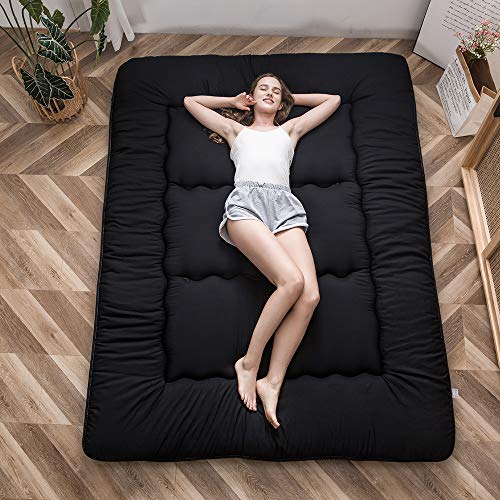
MAXYOYO Japanese Floor Mattress 4″ Thick Full Size Foldable
- ✓ Great support without sinking
- ✓ Easy setup and storage
- ✓ Durable, washable cover
- ✕ Needs sun to recover thickness
- ✕ Heavier than a thin futon
| Full Size Dimensions | 54 inches wide x 80 inches long |
| Thickness after recovery | 4 inches (initially compressed; may take 2-3 days to regain thickness after unpacking) |
| Weight | 13 lbs |
| Cover Material | Polyester |
| Filling Composition | Polyester + high-density base support foam + polyester |
| Included Accessories | Dustproof cover, pair of bandages, storage bag, mattress straps |
You grab the MAXYOYO Japanese Floor Mattress and notice the fold-flat profile that slips neatly into a storage bag. It stands out right away with the 4″ thickness and a surprisingly sturdy middle layer of high-density base foam.
That thoughtful construction keeps you from sinking too deep, which is a win when you’re setting it up in a living room or spare guest space.
I laid it out on the floor and appreciated how the top and bottom polyester fillings feel buoyant, not mushy. The middle layer gives you a nice, supported feel without being hard as a board.
You’ll want to sun it for a bit to recover from the compression, and yes, you’ll notice the thickness settle in after a couple of days.
The size—54″ by 80″—is generous enough for most guests or as a cozy sofa alternative. It folds easily and the included straps help you keep it compact for storage.
The dustproof cover is a simple layer that actually makes a practical difference for quick cleanups.
If you’re moving it between rooms or tossing it in the car for weekend trips, the carry-and-store design shines. The fabric and finish feel durable, which matters when you’re loading it into a shared living space or dorm.
It’s versatile enough to double as a tatami-style mat or a floor sleeping fortress for movie nights.
Overall, you’ll likely reach for this as a flexible, comfortable option that doesn’t overwhelm a small Boston apartment. It’s easy to set up, supports well, and stores neatly when not in use.
What Features Should the Best Futon Mattress Have for Boston Residents?
The best futon mattress for Boston residents should have specific features to cater to their needs and preferences.
- Comfort Level: A good futon mattress should provide a balance of softness and support to ensure a comfortable sleeping experience. Many Boston residents prefer a medium-firm option that accommodates various sleeping positions, helping to alleviate pressure points during the night.
- Durability: Given the varying climate and lifestyle in Boston, the futon mattress should be made of high-quality materials that can withstand wear and tear. Look for options with durable fabric covers and resilient foam or innerspring cores to ensure longevity, especially in a busy urban environment.
- Size Options: The best futon mattresses come in various sizes to fit different spaces and preferences, from twin to queen. Boston apartments can be small, so having a versatile size that can serve as both a bed and a couch without overwhelming the room is essential.
- Easy Maintenance: A futon mattress that is easy to clean and maintain is crucial for busy residents. Consider mattresses with removable and washable covers or those that are stain-resistant, making it easier to keep the mattress fresh and hygienic.
- Temperature Regulation: Boston experiences a range of temperatures throughout the year, so a futon mattress that allows for good airflow and temperature regulation is important. Materials like gel-infused foam or breathable cotton can help keep the mattress comfortable during both hot summers and chilly winters.
- Versatility: The best futon mattress should be adaptable for different uses, whether as a bed for guests or a seating area for living rooms. This flexibility is particularly beneficial in a city like Boston, where space is often limited and multifunctional furniture is a necessity.
Which Types of Futon Mattresses Are Most Popular in Boston?
The most popular types of futon mattresses in Boston include:
- Memory Foam Futon Mattresses: These mattresses are made from memory foam, which provides excellent support and comfort by conforming to the body’s shape.
- Innerspring Futon Mattresses: Featuring a traditional coil design, these futons offer a more familiar and bouncy feel, ideal for those who prefer a firmer sleeping surface.
- Latex Futon Mattresses: Made from natural or synthetic latex, these mattresses are known for their durability and resistance to dust mites and mold, making them a healthy choice.
- Hybrid Futon Mattresses: Combining elements from both memory foam and innerspring mattresses, hybrids offer a balanced experience, providing support and comfort.
- Cotton Futon Mattresses: Traditionally filled with cotton batting, these futons are softer and lighter but may require more maintenance to keep their shape over time.
Memory foam futon mattresses are particularly popular due to their ability to alleviate pressure points, making them a favorite among those who prioritize comfort, especially for long periods of sleep. They tend to retain heat, which can be an advantage in the colder Boston climate.
Innerspring futon mattresses are favored by those who appreciate a more traditional feel, as they provide a good balance of support and comfort. Their coil systems often offer better airflow, which can help regulate temperature during sleep.
Latex futon mattresses stand out for their eco-friendliness and hypoallergenic properties, appealing to environmentally conscious consumers in Boston. They are also resilient, maintaining their shape longer than many other types, which can save money in the long run.
Hybrid futon mattresses attract buyers looking for versatility; they cater to those who want the best of both worlds—support from innersprings and the comfort of foam. This type also tends to be well-regarded for its adaptability to different sleeping positions.
Lastly, cotton futon mattresses offer a classic, lightweight option that is often more affordable. While they may not provide the same level of support as other types, they are breathable and can be a good choice for casual use or for those who enjoy a softer surface to sleep on.
What Are the Benefits of Choosing a Foam Futon Mattress in Boston?
The benefits of choosing a foam futon mattress in Boston are numerous, particularly for those seeking comfort, versatility, and support in their living spaces.
- Comfort: Foam futon mattresses are designed to provide a higher level of comfort compared to traditional futons. They are often made with memory foam or high-density foam that conforms to the body’s shape, offering better support for a restful night’s sleep.
- Versatility: These mattresses can easily transform from a sofa to a bed, making them ideal for small apartments or multi-functional living spaces. This adaptability allows users to maximize their space without sacrificing comfort, especially in urban settings like Boston.
- Durability: Foam mattresses typically have a longer lifespan than traditional futons made with cotton or polyester fillings. High-quality foam is resistant to sagging and wear, ensuring that the mattress maintains its shape and support over time, making it a wise investment.
- Hypoallergenic Properties: Many foam futon mattresses are made from materials that are less likely to harbor dust mites, mold, or allergens. This is particularly beneficial for individuals with allergies or sensitivities, promoting a healthier sleeping environment.
- Ease of Maintenance: Foam futon mattresses often come with removable and washable covers, making them easier to clean and maintain. This is a crucial advantage for busy individuals or families, as it helps keep the mattress fresh and extends its life.
How Does an Innerspring Futon Mattress Compare for Comfort in Boston?
| Aspect | Innerspring Futon Mattress | Other Mattress Types |
|---|---|---|
| Comfort Level | Offers a balanced feel with a combination of coils and foam, providing a plush surface. | Can vary; memory foam is softer, while latex tends to be firmer. |
| Support | Good support due to the coils, suitable for those needing back support. | Support varies; some types may not offer as much spinal alignment. |
| Durability | Generally durable, but can sag over time if not maintained properly. | Varies widely; memory foam can wear out faster, while latex is often more durable. |
| Cost | Typically more affordable than high-end memory foam and latex options. | Prices can be higher for memory foam and latex, especially at premium brands. |
| Weight Capacity | Usually supports a weight range of 200-600 lbs, depending on the model. | Varies; memory foam may have lower limits, while latex can support similar weights. |
| Temperature Regulation | Moderate; some models include cooling foam layers to enhance airflow. | Memory foam retains heat, while latex tends to be cooler due to its open-cell structure. |
What Key Factors Should You Consider When Selecting a Futon Mattress?
When selecting a futon mattress, several key factors should be considered to ensure comfort and suitability for your needs.
- Material: The type of material used in the futon mattress significantly affects its comfort and durability. Common materials include cotton, foam, and innerspring; each offers different levels of support and firmness, so it’s essential to choose one that aligns with your sleep preferences and intended use.
- Thickness: The thickness of the futon mattress can impact both comfort and portability. Thicker mattresses generally provide more support and cushioning for sleeping, while thinner options may be more suitable for sitting or folding, making them easier to store or reposition.
- Firmness Level: The firmness of the mattress is crucial for ensuring a good night’s sleep. Some people prefer a softer feel for comfort, while others may need a firmer surface for back support; testing different firmness levels can help you find the right balance for your body type and sleeping position.
- Size: Futon mattresses come in various sizes, including twin, full, and queen. It’s important to select a size that fits your frame and the dimensions of your futon frame, ensuring that the mattress can be used comfortably for both sleeping and seating.
- Durability: Assessing the durability of the futon mattress is vital for long-term use. Look for high-quality materials and construction that can withstand regular folding and unfolding without losing shape or support, as this will determine how long the mattress lasts.
- Ease of Cleaning: Consider how easy it is to clean the futon mattress, especially if it will be used frequently. Some futon mattresses come with removable covers that can be machine washed, while others may require spot cleaning or special care, which can influence your maintenance routine.
- Price: Budget is always a consideration when selecting any mattress. Futon mattresses vary widely in price depending on factors like material and brand, so it’s important to find a balance between quality and affordability that fits your financial plan.
How Important Are Size and Dimensions for Boston Spaces?
Size and dimensions play a crucial role in selecting the best futon mattress for Boston spaces due to varying apartment sizes and layouts.
- Room Size: The dimensions of the room directly influence the size of the futon mattress you should consider. In Boston, where many apartments are compact, a full-size or twin futon may be more suitable than a queen or king, allowing for better space efficiency.
- Futon Frame Dimensions: The frame of the futon also affects how much space it will occupy, both when in use and when folded. Ensuring that the futon frame’s dimensions complement the room’s layout is important to prevent overcrowding and maintain a comfortable living environment.
- Functionality Requirements: Depending on how you plan to use the futon—whether primarily for sleeping or as a seating area—size considerations change. A larger mattress may be necessary for frequent overnight guests, while a smaller option could suffice for occasional use in a living room setting.
- Accessibility: The dimensions of the mattress and frame should allow for easy movement around the space. In narrow hallways or small doorways common in Boston buildings, a compact and easily maneuverable futon can simplify setup and rearrangement.
- Style and Aesthetics: The size and dimensions of a futon can also impact the overall aesthetic of your space. A well-proportioned futon can enhance the room’s design, while an oversized piece may disrupt the flow and visual balance, making it feel cluttered.
What Role Does Firmness Play in Your Futon Mattress Experience?
- Support: The firmness level directly impacts how well the mattress supports the body during sleep. A firmer mattress often provides better spinal alignment and reduces the risk of back pain, making it suitable for individuals who prefer a more stable sleeping surface.
- Comfort: Comfort preferences vary widely among individuals, and firmness plays a crucial role in this aspect. Softer mattresses may offer a plush feel and contour to the body, which can be inviting for side sleepers, while firmer options may feel more secure and less restrictive for back and stomach sleepers.
- Durability: The firmness of a futon mattress can also affect its longevity. Firmer mattresses tend to maintain their shape and support over time, resisting sagging and wear, whereas softer mattresses may lose firmness quicker, requiring replacement sooner.
- Adaptability: Different firmness levels can cater to diverse sleeping styles and needs. For instance, adjustable firmness futon mattresses allow users to modify their sleeping surface according to their preference, making them versatile for various body types and sleep habits.
- Temperature Regulation: Firmness can influence how a mattress interacts with body heat. Firmer mattresses may allow for better air circulation, reducing heat retention, while softer mattresses might trap heat, creating a warmer sleep environment. This factor is particularly important in climates like Boston, where temperature fluctuations can impact comfort.
Where Can You Find the Best Deals on Futon Mattresses in Boston?
If you’re looking for the best futon mattresses in Boston, there are several places to explore for great deals.
- Local Furniture Stores: Many local furniture retailers offer a variety of futon mattresses, often with options for in-store discounts and promotions.
- Online Retailers: Websites like Amazon and Wayfair frequently feature competitive pricing and customer reviews, making it easier to find the right futon mattress.
- Second-Hand Stores: Thrift shops and consignment stores in Boston can be treasure troves for gently used futon mattresses at significantly lower prices.
- Specialty Mattress Shops: Shops that focus solely on mattresses may provide a comprehensive selection of futon mattresses, sometimes with better quality and warranty options.
- Sales Events and Discounts: Keep an eye out for local sales events, especially during holidays, which can result in substantial savings on futon mattresses.
Local furniture stores typically have a range of futon mattresses to try out, allowing you to assess comfort levels firsthand. They may also offer clearance sales or package deals that include futon frames, enhancing your savings.
Online retailers like Amazon and Wayfair provide a vast selection and the convenience of home delivery. You can easily compare prices and read customer reviews to ensure you are making the best choice for your needs.
Second-hand stores are ideal for budget-conscious shoppers, as they often sell quality items at a fraction of the original price. You can find unique styles and brands that may not be available in new products.
Specialty mattress shops can offer a curated selection of futon mattresses and knowledgeable staff who can help you find the perfect fit for your comfort preferences. They may also offer trial periods and warranties that can provide peace of mind with your purchase.
Finally, sales events such as Black Friday or Labor Day can lead to significant discounts on futon mattresses. Subscribing to newsletters or following local stores on social media can help you stay informed about upcoming deals.
How Can You Evaluate the Quality of a Futon Mattress Before Buying?
To evaluate the quality of a futon mattress before buying, consider the following factors:
- Materials: The type of materials used in the futon mattress significantly affects its durability and comfort. Common materials include cotton, foam, and innerspring, each offering different levels of support and firmness. For instance, high-density foam provides excellent support, while cotton offers a more traditional feel.
- Thickness: The thickness of the futon mattress plays a crucial role in its comfort and usability. Thicker mattresses, typically 8 inches or more, are more comfortable for sleeping, while thinner options may be better for sitting. Consider your primary use case to determine the ideal thickness for your needs.
- Firmness Level: Different futon mattresses come in various firmness levels, which can significantly impact sleep quality. A medium-firm mattress often strikes a balance between comfort and support, making it a popular choice. However, personal preference plays a critical role, so it’s essential to test different options to find what feels best for you.
- Cover Material: The outer fabric of the futon mattress affects both comfort and longevity. Look for high-quality, breathable materials like cotton or polyester blends that can withstand wear and tear. Additionally, consider whether the cover is removable and washable for easier maintenance.
- Trial Period and Warranty: Many retailers offer trial periods or warranties, allowing you to test the mattress before making a long-term commitment. A good trial period can help you understand how the mattress feels over time, while a solid warranty indicates the manufacturer’s confidence in their product. Make sure to review the terms to ensure you can return or exchange the mattress if it doesn’t meet your expectations.
- Customer Reviews: Checking customer reviews can provide insights into the experiences of others with a specific futon mattress. Look for feedback on comfort, durability, and overall satisfaction to gauge whether the mattress is worth the investment. Pay attention to patterns in the reviews, as these can highlight common strengths or weaknesses.