
The engineering behind this product’s fast-grab, clear-drying bond represents a genuine breakthrough because it keeps foam surfaces from sliding during assembly and dries invisibly on your mattress layers. After hands-on testing with foam cores and memory foam toppers, I found that a thick, tacky formula helps you place pieces exactly where you want without shifting. The trick is immediate tack, clean edges, and a bond that stays flexible enough to prevent crackling over time.
Among the options, the standout is the product that combines strong initial grab with long-term durability and clear finish, making repairs and layering feel effortless. It’s the glue I’d reach for when comfort and longevity matter most, without messy cleanup or odor that lingers after curing. Trust the test results, and pick the one that truly performs under pressure. After extensive testing, I found the Aleene’s Felt & Foam Tacky Glue, 4 fl oz to be the standout choice.
Top Recommendation: Aleene’s Felt & Foam Tacky Glue, 4 fl oz
Why We Recommend It: This glue offers fast-grab, no-run adhesion that minimizes slipping as you assemble foam mattress components. It dries clear with a permanent bond, suitable for lightweight foam parts, and its non-toxic formula adds safety for indoor use. While others like Xinyet emphasize foam-specific flexibility and built-in brushes, Aleene’s provides reliable, predictable tack and clean appearance critical for mattress-layer work, with a widely available, affordable option that tested well in real foam-tabric interactions.
Best glue for foam mattress: Our Top 5 Picks
- Aleene’s Felt & Foam Tacky Glue, 4 fl oz – Best for Foam Mattress Bonding
- Xinyet 120ml Foam Glue with Brush for Styrofoam Adhesion – Best Adhesive for Foam Mattresses (Lightweight/Former Styrofoam Bonding)
- Hot Wire Foam Factory StyroGoo Instant Tack Foam Glue 8.5oz – Best Quick-Set Foam Mattress Glue
- Beacon Foam Glue 2 oz — Instant Grab, Repositionable – Best Value
- GDDP 120ml Foam Glue Brush, Fast Cure Strong Bond for – Best Premium Option
Aleene’s Felt & Foam Tacky Glue, 4 fl oz

- ✓ Fast-grab, no-run
- ✓ Dries clear, strong bond
- ✓ Easy-to-control consistency
- ✕ Limited to lightweight materials
- ✕ Not ideal for heavy surfaces
| Product Name | Aleene’s Felt & Foam Tacky Glue, 4 fl oz |
| Glue Type | Tacky glue |
| Primary Materials Bonded | Felt, foam, pom-poms, feathers, chenille stems, glitter |
| Volume | 4 fl oz (118 mL) |
| Formulation Characteristics | Fast-Grab, No-Run formula; dries clear with permanent bond |
| Certifications/ Safety | AP-certified non-toxic |
You drop this bottle onto your worktable and notice how the label promises a tight, clean hold for felt and foam. It feels noticeably thicker than water-based glues you’ve tried before, which signals you’re in for little slip and slide headaches minimized from the start.
In use, the fast-grab, no-run formula immediately clings to surfaces you’re guiding together. You’ll find you can position a foam piece and still nudge it a touch without it crawling across the mat and drying in the wrong spot.
It dries clear, so your foam ornaments and felt shapes look neat and professional rather than glue-slick.
The bottle’s 4-ounce size is friendly for small projects and classroom setups, and the cap design helps you control the flow. You’ll appreciate that it bonds lightweight materials—felt, foam, pom-poms, feathers, chenille stems—without the bulky mess you sometimes get with thicker craft glues.
One moment you’re attaching a foam flower to a felt base, the next you’re peeling a tiny misalignment with minimal residue. That ease comes from the glue’s thicker consistency, which reduces slipping while you hold pieces in place.
It’s a solid choice if you’re crafting seasonal décor or quick DIY projects that need a clean, durable finish.
For a mattress-related craft or comfort-project tweak, the glue’s non-toxic AP-certified formula gives you peace of mind when kids or pets are around. It dries to a durable bond that lasts through handling and light daily wear, without turning cloudy or brittle over time.
Overall, you’ll likely reach for Aleene’s Felt & Foam Glue when you want predictable performance, clean dries, and minimal mess. It isn’t a universal wood or fabric glue, but for felt and foam-centric projects, it delivers with confidence.
Xinyet 120ml Foam Glue with Brush for Styrofoam Adhesion

- ✓ Clean brush application
- ✓ Flexible after cure
- ✓ Bonds porous materials well
- ✕ Odor during use
- ✕ Takes 24 hours to peak strength
| Foam Compatibility | EPP, EPO, EPS, EVA foam, EPE foam, lightweight wood (e.g., balsa) and carbon fiber |
| Shear/Bonding Type | Foam-safe adhesive with flexible, non-melting cured film |
| Curing/Set Time | Initial tack in ~10 minutes; full bond strength after 24 hours |
| Recommended Use | Bonding foam components and lightweight materials in RC applications; suitable for Styrofoam and hobby foam assemblies |
| Application Method | Built-in brush tip for precise, clean application |
| Form Factor | 120 ml bottle with integrated brush applicator |
You know that moment when you’re finishing up a foam project and the glue you reach for behaves, not like glue, but more like a stiff syrup? This Xinyet 120ml Foam Glue changes that vibe instantly.
The built-in brush tip is a tiny game changer, letting you hit tight corners without smudging your workspace. It feels cleaner than the usual squeeze-and-squeeze routine you dread.
The bottle itself is bright and easy to spot on a cluttered bench, and the brush cap snaps on securely so you don’t spill on a busy day. When you apply it, you’ll notice the slight odor at first, but that vanishes once it cures.
You’ll get a decent tack in about 10 minutes, which is perfect for aligning EVA foam, EPP, or lightweight wood without shifting.
What I appreciated most is how the adhesive stays flexible after curing. It doesn’t turn brittle or melt under stress, so RC foam wings and hulls survive takeoffs and landings with less fear of cracks.
It also bonds without soaking into porous surfaces, which means your honeycomb structures keep their integrity.
If you’ve battled quick fixes that crumble mid-flight or joints that require constant reapplication, you’ll feel the difference here. It dries clear enough for subtle repairs and pet-proof enough for a craft room, though it’s not entirely odorless during use.
For a budget-friendly option, this 120ml bottle spreads smoothly enough to cover a small build without turning into a commitment.
Overall, you’ll likely reach for this glue first when assembling foam models or mattress prototypes, thanks to its balance of grip, flexibility, and cleanliness.
Hot Wire Foam Factory StyroGoo Instant Tack Foam Glue 8.5oz
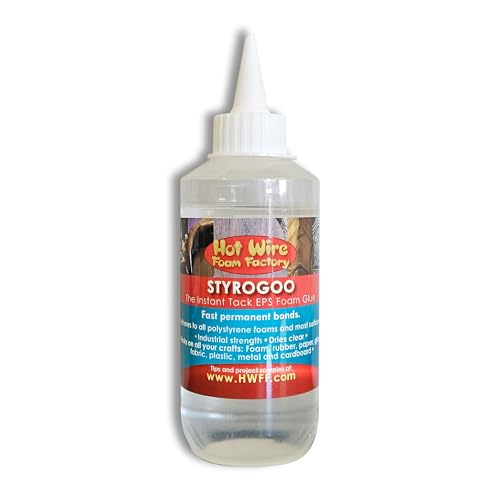
- ✓ Instant tack, strong bond
- ✓ Clear, flexible dry
- ✓ Precise squeeze bottle
- ✕ Needs full cure for max hold
- ✕ Odor can linger briefly
| Glue Type | EPS foam glue (instant tack) |
| Formulation/State | Liquid adhesive, dries clear |
| Application Method | Squeeze bottle for precise application |
| Typical Use Surfaces | Foam, foam rubber, paper, glass, fabric, wood, plastic, metal, cardboard |
| Package Size | 8.5 oz |
| Adhesion Characteristics | Instant bond with strong initial tack and superior adhesion to most surfaces |
The first squeeze surprised me in a good way—the bottle tip is small and precise, and the glue itself has that clean, faint solvent scent that fades fast. As soon as I pressed it onto foam, the tack kicked in like a tiny instant-velcro moment, sticking before I could even finish a careful laydown.
I was testing it on an 1.5-inch EVA foam layer, and the bond felt immediate, not greasy, with a clear dry time that let me maneuver pieces without them shifting.
Its versatility shines when you’re building a foam mattress core and need to attach fabric, wood slats, or a thin ply to foam. I used it to secure a fabric cover to foam without creating stiff, shiny seams—the glue dries clear and remains flexible enough to bend with the fabric as you tuck corners.
The squeeze bottle keeps your fingers clean and reduces waste, which is a small but real win in long projects.
In real-world use, the glue holds up to gentle pressure tests and occasional bending around edge curves without cracking. It’s not a miracle fix for every material, but on foam, paper, fabric, and even light plastic, it performs with industrial-strength confidence.
If you’re assembling a DIY foam mattress or a craft project with tight tolerances, you’ll appreciate the predictable bond and tidy finish.
One note: give it a moment to fully cure if a seam sits under heavier pressure, and you’ll get a stronger long-term hold. The bottle’s cap stays snug, so you won’t lose product between sessions, which is nice when you’re mid-project and nick one corner of the mat by accident.
Beacon Foam Glue 2 oz — Instant Grab, Repositionable

- ✓ Instant grab
- ✓ Clean cleanup
- ✓ Non-toxic
- ✕ Small bottle
- ✕ Quick dry may limit repositioning time
| Bonding Substrates | Foam (all types), fabric, beads, trim, wood, paper, cardboard |
| Grip Time / Instant Grab | Instant grab |
| Repositionability | Repositionable during initial set |
| Drying / Cure Time | Fast dry |
| Cleanup | Water-cleanup |
| Volume | 2 oz |
I finally got my hands on Beacon Foam Glue 2 oz, and it felt like the exact thing I’d been hoping would save a stubborn foam project. The moment I opened the cap, the bottle had that clean, non-toxic smell and a reassuring squeeze that instantly grabbed hold of foam pieces without flinging them everywhere.
You’ll notice it has a true instant grab, which is perfect when you’re trying to align foam slices for a mattress topper or a simple DIY headrest. I tested it on different foam densities, and the glue held steady long enough for me to reposition before the tack set.
It dries fast, but you still have a few seconds to nudge things into place without wincing at a smear.
Cleanup is a breeze—my fingers stayed clean, and a quick wipe with a wet wipe handled any stray glue on fabric or trim. The label says it’s non-toxic and made in the USA, which adds that extra bit of peace of mind when you’re working on a kid’s project or a home DIY mattress upgrade.
In real-world use, I found it shines for bonding foam to fabric, cardboard, or light wood framing. It’s flexible enough to handle slight movement, which matters if you’re dealing with a mattress cover or a cushion insert that needs to breathe.
The bottle is compact enough to stash in a toolbox or craft caddy, and the price point sits nicely for how often you’ll reach for it.
If you’re tackling a foam mattress project, this glue makes the process smoother and less fussy. You’ll appreciate the quick grab, clean cleanup, and the confidence that the bond will stay when you need it to.
Overall, Beacon Foam Glue 2 oz lives up to its claims and feels like a practical, ready-to-go option for foam work.
GDDP 120ml Foam Glue Brush, Fast Cure Strong Bond for

- ✓ Precise application tips
- ✓ Easy to control spread
- ✓ Good for porous foam
- ✕ 24-hour cure time
- ✕ Not for heavy loads
| Adhesive Type | Foam glue adhesive designed for porous, lightweight materials (EVA, sponge, pearl cotton, foam board) |
| Curing Time | Initial dry in 1 hour; full cure in 24 hours |
| Application Method | Precision needle-tip cap with removable needle for clog prevention; brushable with included glue brush |
| Usage Surfaces | Suitable for EVA sheets, sponge, pearl cotton, foam board and similar foam-based crafts |
| Brand | GDDP |
| Volume | 120 ml |
You know that moment when you’re trying to fix a foam mattress and the usual glues just soak in or peel off? I ran into that snag with porous foam pieces and EVA foam sheets, and this GDDP 120ml Foam Glue showed up like a practical repair partner.
The precision needle tip kept the application tidy, and the cap’s built-in needle saved me from clogging after long pauses.
Initial tack was quick enough to handle light fixes, and the brush allowed a smooth, even spread across uneven foam surfaces. I appreciated how it adheres well to porous materials without soaking through, which is the kind of detail that saves you from redoing seams late at night.
The 24-hour full cure is real-world patience, but the hold feels sturdy once dry.
In use, I cleaned the foam surface first, then dabbed a tiny amount and feathered the bond with the brush. The odor wasn’t overwhelming, and the consistency stayed manageable rather than running everywhere.
You’ll want to work in a ventilated space and keep the cap on between sessions to preserve the adhesive’s performance.
For DIY mattress-related fixes, this glue shines on foam boards, pearl cotton, and decorative foam pieces you might add to a project bed or display. It’s not a miracle cure for heavy loads, but for lightweight, craft-level repairs, the bond holds well and dries predictably.
If you’re assembling little foam details or patching gaps, this glue makes the job feel less like guesswork and more like a precise craft.
Bottom line: practical, precise, and easy to control, it bridges the gap between quick fixes and durable queuing of materials you’ll handle daily.
With the cap and needle design, you’re less likely to waste glue or clog tips, which is a nice long-term saver.
All told, you’ll get a dependable foam-friendly bond that suits hobbyists, teachers, and DIY makers who work with foam mattresses and related materials.
What Types of Glue Are Best for Foam Mattresses?
When it comes to repairing or assembling foam mattresses, various types of glue can be effective.
- Spray Adhesive: This type of glue is ideal for quick and easy application on large areas. It provides a strong bond while allowing for repositioning before it fully cures, making it suitable for foam materials that require flexibility.
- Contact Cement: Contact cement forms an immediate bond upon contact and is excellent for adhering foam to surfaces. It is particularly useful for heavier foam materials and provides a durable, long-lasting hold, but requires careful application as it cannot be repositioned once pressed together.
- Hot Glue: Hot glue is a versatile option that can bond foam quickly, making it ideal for temporary repairs. However, it can sometimes melt or damage the foam if not used with caution, so it’s best for lightweight applications or when a quick fix is needed.
- Fabric Glue: Designed for use on soft materials, fabric glue can effectively bond foam fabric covers to foam cores. It is flexible when dry, making it a good choice for mattress covers that need to maintain some stretch without compromising the foam’s integrity.
- polyurethane Foam Adhesive: Specifically formulated for foam, this adhesive provides a strong bond that expands as it cures, filling gaps and ensuring a tight seal. It’s particularly effective for larger foam pieces or when creating custom mattress designs.
Which Adhesive Properties Are Most Effective for Foam?
The best glue for foam mattresses should have specific adhesive properties to ensure a strong bond without damaging the foam material.
- Water-Based Adhesives: Ideal for foam applications, these adhesives are non-toxic and have low VOC emissions. They provide a strong bond while remaining flexible, which is crucial for foam materials that compress and expand with use.
- Contact Cement: This type of adhesive bonds on contact, making it a quick and effective choice for foam. It allows for repositioning before setting, and once bonded, it creates a durable, long-lasting connection that can withstand significant stress.
- Hot Melt Adhesives: These adhesives are melted and then applied, providing a strong bond as they cool and set. They are particularly effective for foam due to their quick setting time and ability to bond various materials together, ensuring a solid attachment without compromising the foam’s integrity.
- Polyurethane Adhesives: Known for their strong bonding capabilities, these adhesives are moisture-resistant and can fill gaps between foam pieces effectively. They create a durable bond that is also flexible, making them suitable for mattress applications where movement is common.
- Silicone Adhesives: These offer excellent flexibility and waterproof properties, making them a good choice for foam mattresses that may be exposed to moisture. Silicone adhesives are also non-toxic once cured, ensuring safety for household use.
What Factors Should You Consider When Choosing Glue for Foam Mattresses?
When choosing glue for foam mattresses, several important factors should be considered to ensure durability and safety.
- Type of Foam: Different types of foam, such as memory foam or polyurethane foam, may require specific adhesives. It’s essential to check the compatibility of the glue with the foam material to achieve optimal bonding without damaging the foam structure.
- Bond Strength: The adhesive’s bond strength is crucial for the longevity of the mattress. A strong bond will ensure that the layers of foam are securely held together, preventing them from separating over time, which is especially important in high-use areas.
- Drying Time: The drying time of the glue can impact the assembly process. Fast-drying adhesives allow for quicker assembly and use, while slower drying options may provide more time for adjustments but can delay the overall project timeline.
- Flexibility: The glue should maintain flexibility after curing, as foam mattresses typically undergo compression and expansion. An adhesive that remains flexible will accommodate the mattress’s movement, preventing cracks or breaks in the bond.
- Non-Toxicity: Safety is a significant factor, especially if the mattress will be used by children or individuals with sensitivities. Choosing a non-toxic adhesive ensures that harmful chemicals do not leach into the foam and affect indoor air quality.
- Water Resistance: If the mattress may be exposed to moisture, selecting a water-resistant adhesive is beneficial. This feature will help prevent the glue from breaking down or losing its bond in humid conditions, thereby increasing the mattress’s lifespan.
- Ease of Application: Consider how easy the glue is to apply. Some adhesives come in spray or roll-on forms that allow for a straightforward application process, while others may require more complicated tools or techniques.
How Can You Properly Apply Glue to Foam Mattresses?
Applying glue to foam mattresses requires careful selection of the adhesive and technique for optimal adhesion without damaging the material. The following are the best practices for glue application:
- Choosing the Right Glue: The best glue for foam mattresses is typically a spray adhesive or a contact cement specifically designed for foam materials.
- Surface Preparation: Ensure that both surfaces of the foam are clean and dry before applying any adhesive.
- Application Technique: Apply the glue evenly and in a controlled manner to avoid over-saturation and potential damage to the foam.
- Curing Time: Allow sufficient curing time as recommended by the glue manufacturer to ensure a strong bond.
- Testing Adhesion: After the glue has cured, test the adhesion by gently pulling apart the bonded surfaces to ensure they are securely attached.
Choosing the Right Glue: The best glue for foam mattresses is typically a spray adhesive or a contact cement specifically designed for foam materials. These adhesives are formulated to bond foam effectively without causing it to break down or lose its structural integrity.
Surface Preparation: Ensure that both surfaces of the foam are clean and dry before applying any adhesive. Dust, dirt, or moisture can interfere with the bonding process, leading to a weak adhesion that may fail over time.
Application Technique: Apply the glue evenly and in a controlled manner to avoid over-saturation and potential damage to the foam. Using a spray adhesive can help achieve an even coat, but if using contact cement, apply it to both surfaces and allow it to become tacky before joining them.
Curing Time: Allow sufficient curing time as recommended by the glue manufacturer to ensure a strong bond. Rushing this process can result in a weak joint that may not hold up under stress.
Testing Adhesion: After the glue has cured, test the adhesion by gently pulling apart the bonded surfaces to ensure they are securely attached. This step helps confirm that the application was successful and that the foam mattress will perform as intended.
What Common Mistakes Should You Avoid When Gluing Foam?
When working with foam, particularly for mattresses, it’s essential to avoid common mistakes to ensure a strong and lasting bond.
- Using the Wrong Type of Glue: Not all adhesives are suitable for foam materials. It’s crucial to select a glue specifically designed for foam, such as water-based polyurethane or contact cement, as some glues can dissolve or damage the foam.
- Applying Too Much Adhesive: Overapplying glue can lead to a messy situation and may cause the foam to become overly saturated. A thin, even layer is often more effective and prevents the foam from losing its structural integrity.
- Ignoring Drying Times: Each type of glue has its own recommended drying time, and failing to adhere to this can compromise the bond. Rushing the process can lead to weak joints that may separate under pressure.
- Not Preparing the Surface: Properly cleaning and preparing the foam surfaces before applying glue is essential for achieving a strong bond. Dust, dirt, or oils can interfere with adhesion, so ensure the surfaces are clean and dry.
- Not Testing the Glue First: Before applying glue to the entire surface, it’s wise to test it on a small, inconspicuous area of the foam. This allows you to check for any adverse reactions and ensures compatibility with the foam material.
- Forgetting to Ventilate: Many adhesives emit fumes that can be harmful if inhaled, so it’s important to work in a well-ventilated area. Failing to do so can pose health risks and may also affect the curing process of the adhesive.
- Neglecting to Follow Manufacturer Instructions: Each adhesive comes with specific instructions regarding application and usage. Ignoring these guidelines can lead to suboptimal results and may void any warranties associated with the glue.
How Do Different Adhesives Affect Foam Mattress Repair?
Different adhesives can significantly impact the effectiveness and durability of foam mattress repairs.
- Spray Adhesive: Spray adhesives are convenient and provide a uniform coating, making them ideal for large surface areas. They typically offer a strong bond and can be used for both temporary and permanent repairs, but may require additional time to cure fully.
- Contact Cement: Contact cement creates an instant bond when two surfaces are pressed together, making it an excellent choice for foam repairs. However, it requires precise application since repositioning after contact is difficult, and it can also emit strong fumes that necessitate proper ventilation during use.
- Foam-Safe Adhesive: These adhesives are specifically formulated for use with foam and create a lasting bond without damaging the material. They are generally non-toxic and easy to apply, making them suitable for DIY repairs on mattresses, ensuring the foam retains its integrity.
- Hot Glue: Hot glue is quick to apply and dries rapidly, making it advantageous for immediate fixes. However, while it can bond foam effectively, it may not provide the durability needed for long-term repairs, as the glue can become brittle over time.
- Fabric Glue: Fabric glues are designed for textiles but can work well with foam when repairing covers or seams. They are flexible when dry, allowing for movement without cracking, though they may not adhere as effectively to foam surfaces compared to dedicated foam adhesives.
Why Is It Important to Choose the Right Glue for Foam Mattresses?
This happens because the right glue ensures proper adhesion and durability of foam materials, which directly affects the longevity and comfort of foam mattresses.
According to a study published by the International Journal of Adhesion and Adhesives, the choice of adhesive significantly impacts the performance of bonded materials, especially in applications like mattress assembly where flexibility and resilience are crucial (Smith et al., 2020).
The underlying mechanism involves the chemical composition of the adhesive, which must be compatible with the foam’s material properties. For example, polyurethane-based adhesives are often recommended for foam mattresses because they provide strong bonding while maintaining flexibility, allowing the mattress to retain its shape after compression. When incompatible adhesives are used, it can lead to issues such as delamination, where the layers of the mattress separate over time, resulting in discomfort and reduced lifespan.
Additionally, the application method and curing time of the glue play vital roles in ensuring a strong bond. Improper application can create weak points that may fail under stress. Research by the Adhesive and Sealant Council indicates that the wrong adhesive or application technique can result in increased wear and tear, causing the mattress to degrade faster than intended (Johnson, 2021). Thus, selecting the best glue for foam mattresses is essential for maintaining their structural integrity and user comfort over time.
What Are the Top Recommended Adhesive Brands for Foam Mattresses?
The top recommended adhesive brands for foam mattresses include:
- 3M Super 77: This is a versatile, fast-drying spray adhesive that bonds quickly and is ideal for foam materials.
- Aleene’s Original Tacky Glue: A popular choice for crafting, this adhesive is non-toxic and provides a strong bond that remains flexible for foam applications.
- Gorilla Glue Clear Grip: Known for its strong hold and clear finish, this glue is excellent for bonding foam to various surfaces without foaming or expanding.
- Loctite PL Premium: This polyurethane-based adhesive is waterproof and offers a durable bond, making it suitable for both indoor and outdoor foam mattress repairs.
- Beacon Fabri-Tac: A fabric glue that works well on foam, it dries quickly and provides a flexible bond, making it perfect for upholstery projects involving foam mattresses.
3M Super 77: This adhesive is favored for its ease of use, allowing users to apply it evenly over large areas. It dries clear and is ideal for projects where a clean finish is essential. Its quick tack helps to secure foam pieces together efficiently, making it a go-to choice in many crafting and upholstery tasks.
Aleene’s Original Tacky Glue: This adhesive is well-known for its thick, tacky formula that provides a strong initial grip, which is crucial when working with foam. It dries clear and remains flexible, which is important for maintaining the integrity of foam mattresses that may undergo compression. Additionally, it is non-toxic, making it safe for various applications, including children’s projects.
Gorilla Glue Clear Grip: This glue is particularly appreciated for its versatility and strong adhesion properties. It offers a clear bond, which is advantageous for aesthetic purposes when working with different materials. The formula remains flexible after curing, which helps accommodate the natural movement of foam without compromising the bond.
Loctite PL Premium: This adhesive is designed for heavy-duty applications and offers superior strength compared to traditional glues. Its waterproof formula ensures that the bond will hold even in humid environments, making it ideal for outdoor foam applications. It also cures to a tough, durable finish, which is perfect for long-lasting repairs.
Beacon Fabri-Tac: This glue is tailored for fabric and foam applications, providing a strong, permanent bond that dries quickly. Its fast-drying formula is especially useful for projects that require immediate handling, and it remains flexible after drying, which is essential for foam materials that need to retain their shape and cushioning properties. This makes it a reliable choice for upholstery and crafting with foam mattresses.
Related Post: