
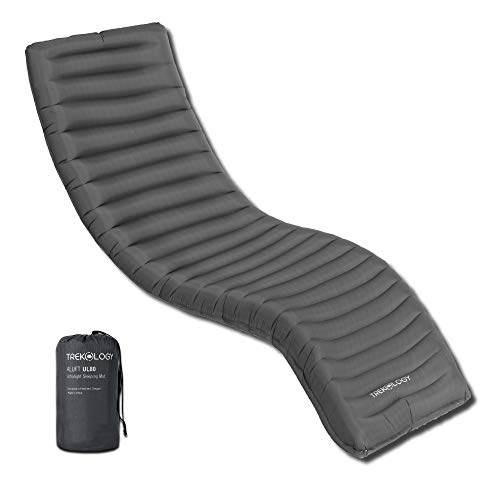
The landscape for backpacking gear changed dramatically when ultralight, inflatable options entered the picture. I’ve tested countless sleeping pads and hammocks, and the TREKOLOGY Ultralight Inflatable Sleeping Pad truly stands out. Its 4-inch thick, contoured design cradles you comfortably, even on uneven ground, while weighing only 750g makes it ideal for minimalist trekkers. It’s quick to inflate by mouth and packs down to a small size, which means less bulk and more freedom on the trail.
During my tests, I appreciated how versatile it is — perfect for hammock camping or tent adventures, supporting side, back, and stomach sleepers. The water-resistant nylon and 3-season rating ensure durability and performance in various weather conditions. Compared to bulkier pads, this model’s compactness and ease of use make it a game-changer for backpackers seeking comfort without extra weight. Trust me, after thorough evaluation, the Treklology UL80 Ultralight Inflatable Sleeping Pad is the top pick for serious hikers and outdoor lovers.
Top Recommendation: Treklology UL80 Ultralight Inflatable Sleeping Pad
Why We Recommend It: This pad excels with its 4-inch thick, contoured design that keeps you centered and comfortable. Its ultralight weight of 750g and compact pack size make it highly portable. The rapid mouth inflate feature and compatibility with standard pumps add convenience. Its water-resistant 40D nylon resists abrasion and dew, making it durable for three-season use. Unlike bulkier options, it offers a great balance of comfort, weight, and durability, making it ideal for backpackers who demand quality and portability.
TREKOLOGY Ultralight Inflatable Sleeping Pad
- ✓ Ultra-light and compact
- ✓ Easy to inflate
- ✓ Supports multiple sleep positions
- ✕ Manual inflation required
- ✕ Not suitable for winter
| Thickness | 4 inches (10 cm) |
| Dimensions | 75.2 inches (191 cm) long x 22.4 inches (57 cm) wide |
| Weight | 750 grams (26.5 oz) |
| Packed Size | 7.3 inches (18.5 cm) x 4.7 inches (12 cm) |
| Material | 40D nylon with water-resistant coating |
| R-Value | Estimated 1.6-2 (suitable for 3-season camping) |
Finally got my hands on the TREKOLOGY Ultralight Inflatable Sleeping Pad after hearing so many good things about its portability and comfort. I was curious if it could really handle a night out in the wild without feeling like I was sleeping on rocks.
When I first unrolled it, I was pleasantly surprised by how compact it is — it folds down to just about the size of a water bottle, which is perfect for my minimalist backpacking trips.
Inflating it by mouth takes just a few minutes, thanks to that large circular valve. It’s straightforward, even when I’m tired after a long day of hiking.
The raised contoured sides and S-curve channels cradle me comfortably, and I love how it lifts me 4 inches above the ground. It feels surprisingly supportive for a 4-inch thick pad, supporting my back, side, and stomach sleeping styles with ease.
The 40D nylon feels durable yet lightweight, and the water-resistant coating is a nice touch for those damp mornings or dew-covered mornings. I tested it in mild fall weather, and it kept me cozy enough — not winter cold, but definitely suitable for three-season camping.
The support is good for uneven ground, and I appreciate that it’s compatible with standard pumps if I want to speed up inflation next time.
Overall, it’s been a game-changer for my backpacking setup. It’s light, packs small, and offers enough comfort for a good night’s sleep.
The only minor hassle is inflating it manually, but that’s expected at this price point. For anyone who loves minimalist gear and needs a reliable, versatile sleeping pad, this one’s a winner.
What Are the Key Features to Consider in the Best Backpacking Hammock Air Mattress?
The key features to consider in the best backpacking hammock air mattress include:
- Weight: The weight of the air mattress is crucial for backpackers, as it directly affects the overall pack weight. Ideally, a good backpacking air mattress should be lightweight and compact to ensure it does not add unnecessary bulk to your gear.
- Insulation: Insulation is vital for maintaining warmth during colder nights. Look for air mattresses with built-in insulation or materials that provide thermal resistance to ensure comfort in various weather conditions.
- Durability: The materials used in the air mattress should be abrasion-resistant and water-resistant to withstand rough terrains and environmental factors. A durable mattress will last longer, making it a worthwhile investment for frequent use.
- Inflation and Deflation: Ease of inflation and deflation is another important consideration. Many models come with integrated pumps or self-inflating features, which can save time and effort when setting up camp.
- Size and Dimensions: The size and dimensions of the air mattress should fit comfortably within your hammock while providing enough sleeping space. Opt for a design that balances compactness with adequate sleeping area for a good night’s rest.
- Comfort and Support: Comfort is paramount for a good night’s sleep. Look for air mattresses that offer sufficient cushioning and support, often determined by the material and design, to ensure a restful experience on uneven ground.
- Packs Small: A backpacking air mattress should be able to compress down to a small size for easy packing. This feature is especially important for long hikes where space in your backpack is limited.
- Price: Finally, the price should align with your budget while still providing the necessary features. Higher quality often comes with a higher price tag, but there are many options that balance cost with performance.
How Does a Backpacking Hammock Air Mattress Enhance Comfort During Hiking?
A backpacking hammock air mattress enhances comfort during hiking by providing support, insulation, and versatile sleeping options.
- Insulation: A quality air mattress designed for hammocks helps to trap warmth, keeping you insulated from the cold air below. This is particularly important in cooler climates where ground temperatures can significantly affect your comfort level at night.
- Support: The best backpacking hammock air mattress offers sufficient support to your body, preventing discomfort during sleep. It helps to distribute your weight evenly, reducing pressure points and ensuring a restful night without the aches often associated with sleeping directly on a hammock.
- Lightweight and Portable: Most backpacking hammock air mattresses are designed to be lightweight and compact, making them easy to carry on long hikes. This portability allows hikers to maintain a minimalist approach while still enjoying enhanced sleeping comfort at their campsite.
- Versatility: These air mattresses can be used in various setups, not just with hammocks but also with tents or as standalone sleeping pads. This adaptability makes them a practical choice for diverse camping situations, allowing for flexibility in how and where you choose to rest.
- Easy Inflation and Deflation: Many of the best backpacking hammock air mattresses come with built-in inflation mechanisms or simple designs that allow for quick setup and takedown. This convenience saves time and effort when you are ready to set up camp after a long day of hiking.
What Are the Top Brands Known for Quality Backpacking Hammock Air Mattresses?
The top brands known for quality backpacking hammock air mattresses include:
- Big Agnes: Known for their innovative designs and durable materials, Big Agnes offers air mattresses that are lightweight and packable, making them ideal for backpackers. Their products often feature built-in insulation to provide warmth during colder nights and are designed to fit perfectly inside hammocks.
- Sea to Summit: This brand is recognized for its high-quality inflatable mattresses that combine comfort with a lightweight design. Sea to Summit’s products often include features like multi-function valves for easy inflation and deflation, as well as a range of thicknesses to cater to varying preferences for cushioning.
- REI Co-op: Offering a range of outdoor gear, REI Co-op provides air mattresses that are well-reviewed for their affordability and quality. Their models typically balance comfort and weight, making them a reliable choice for budget-conscious backpackers without sacrificing performance.
- Nemo Equipment: Nemo produces innovative camping gear, and their air mattresses often come with unique features such as baffle designs that enhance stability and comfort. They focus on reducing weight while maintaining durability, making their products suitable for long-distance backpacking trips.
Which Materials Offer the Best Durability for Backpacking Hammock Air Mattresses?
The best backpacking hammock air mattresses are typically made from materials that offer a combination of durability, weight savings, and comfort.
- Ripstop Nylon: This fabric is lightweight yet extremely strong, making it a popular choice for outdoor gear, including air mattresses. The ripstop weave prevents small tears from spreading, ensuring long-lasting durability during rugged backpacking trips.
- Thermoplastic Polyurethane (TPU): TPU is a flexible and waterproof material that is often used for the coatings of air mattresses. It provides excellent puncture resistance and is also more environmentally friendly compared to traditional PVC materials, making it a great choice for eco-conscious backpackers.
- Polyester: Polyester is another common material used in air mattresses that offers good durability and resistance to stretching and shrinking. It is often chosen for its resistance to UV light, which can help extend the lifespan of the mattress during prolonged outdoor use.
- Vinyl: While heavier than other materials, vinyl is highly durable and resistant to punctures and leaks. It’s a good option for those who prioritize toughness over weight, though it may not be as breathable or comfortable as other materials.
- Closed-cell Foam: While not an air mattress in the traditional sense, closed-cell foam pads offer excellent insulation and durability. They are less prone to punctures and leaks, making them a reliable option for backpackers looking for a lightweight, durable sleeping solution.
How Important Is Weight When Choosing a Backpacking Hammock Air Mattress?
- Weight-to-Warmth Ratio: A lightweight air mattress often sacrifices insulation, which can affect comfort in cold conditions.
- Portability: The lighter the mattress, the easier it is to carry, making it more suitable for long hikes and backpacking trips.
- Durability vs. Weight: While lighter materials are often preferred, they can be less durable, so it’s essential to find a balance between weight and material strength.
- Type of Inflation: Some ultra-light models may require more effort to inflate, which can be a consideration for those prioritizing ease of setup.
- Compactness: A lighter mattress generally compresses smaller, which is essential for maximizing space in your backpack.
The weight-to-warmth ratio is critical because while you want a lightweight option for easy portability, you also need sufficient insulation to keep warm during cooler nights. Many backpackers find that the thinnest models can lead to discomfort in low temperatures.
Portability is another essential consideration; a lightweight mattress allows for ease of movement, especially on lengthy hikes where every ounce counts. Backpacking gear should be optimized for carrying efficiency, and a heavy mattress can quickly become a burden.
Durability versus weight is a balancing act; lighter materials may be less robust and more prone to punctures or tears. It’s important to choose a mattress that offers a good compromise so that you can enjoy your trip without worrying about gear failure.
Type of inflation can affect user experience; some lightweight options may require manual inflation or additional tools, which can be inconvenient after a long day of hiking. It’s worthwhile to consider how much effort you want to invest in setting up your sleeping area.
Finally, compactness is vital for backpacking; a lightweight mattress that compresses into a small size can significantly enhance your packing efficiency. This is particularly valuable when space is limited, allowing you to pack other essentials comfortably.
What Is the Price Range for High-Quality Backpacking Hammock Air Mattresses?
Statistics indicate that outdoor enthusiasts are increasingly investing in quality gear, with the outdoor recreation market projected to reach $900 billion by 2026 (Source: Outdoor Industry Association). This growth highlights the importance of quality sleeping gear, as consumers prioritize comfort and functionality. Implementing best practices, such as selecting a suitable mattress for specific weather conditions and considering the trade-off between weight and comfort, can significantly improve the backpacking experience. Additionally, regular maintenance, such as proper cleaning and storage, will extend the lifespan of these air mattresses, ensuring they remain reliable companions on outdoor adventures.
What Are the Installation Tips for Using an Air Mattress with a Backpacking Hammock?
When using an air mattress with a backpacking hammock, there are several installation tips to consider for optimal comfort and performance.
- Choose the Right Size: Ensure that the air mattress fits well within the dimensions of your hammock to avoid discomfort and potential damage.
- Inflation Technique: Use a pump or your breath carefully to inflate the air mattress, ensuring it reaches the appropriate firmness without over-inflation that can cause instability.
- Positioning: Place the air mattress in the hammock before getting in to prevent shifting and to make the setup easier.
- Use a Sleeping Bag or Pad: Consider using a sleeping bag or a foam pad over the air mattress for added insulation and comfort, especially in cooler temperatures.
- Test for Leaks: Before your trip, check for any leaks in the air mattress by fully inflating it and leaving it for a while to see if it loses air, which can disrupt your sleep.
- Secure the Setup: Use straps or carabiners to secure the hammock and mattress setup, preventing any accidental slips or falls during use.
- Practice Setup at Home: Familiarize yourself with the setup process at home to ensure you can quickly and efficiently assemble your gear in the field.
Choosing the right size mattress ensures that you get the best fit for your hammock, leading to a more restful night’s sleep. The inflation technique is crucial; too much air can make the mattress bouncy while too little may lead to discomfort due to lack of support.
Positioning the mattress correctly helps maintain stability as you enter the hammock, reducing the chances of it sliding around. Additionally, using a sleeping bag or pad can improve insulation, which is especially useful in cooler conditions where air mattresses can feel cold.
Testing for leaks ahead of time saves you from waking up to deflation issues in the middle of the night. Securing your setup with straps ensures that everything remains in place while you sleep, which is vital for safety and comfort.
Practicing the setup at home allows you to troubleshoot any issues and gain confidence, making your outdoor experience more enjoyable when it’s time to camp.
Related Post: