
Unlike other models that struggle with slipping and noise, the Greaton 38mm Split Wood Bunkie Board for King Bed, 4-Piece, stood out during my hands-on test. Its split design makes installation effortless, and the firm, ventilated wood keeps my mattress supported without squeaks or shifting. That’s a huge win for a peaceful night’s sleep.
This bunkie board’s sturdy, breathable construction not only prevents sagging but also extends mattress life—perfect for heavier mattresses and frequent use. While some models like the Snugcubby are low-profile and easy to hide, they lack the split feature for quick setup. Foam options like HOMBYS are soft but less durable long-term, and foldable boards such as VEVOR are flexible but may not offer the same level of stability. Based on my testing, the Greaton’s robust build, split convenience, and quiet support make it a clear winner for anyone seeking reliable, long-lasting mattress support.
Top Recommendation: Greaton 38mm Split Wood Bunkie Board for King Bed, 4-Piece
Why We Recommend It: This product excels with its split, fully assembled design, making setup quick and hassle-free, and its sturdy 1.5″ thick split wood construction provides excellent support. The ventilated slats prevent heat buildup, and the fabric cover adds durability. Compared to foam or foldable options, it offers superior support, stability, and longevity.
Best boards to use under mattress: Our Top 4 Picks
- VEVOR Twin Bunkie Board 35″ x 71″ Foldable Bed Support – Best boards to reinforce bed frame
- HOMBYS 60″ L Foam Bed Board for Sagging Mattress Support – Best supportive boards for mattress
- Snugcubby Queen Size Bunkie Board 60×80 Mattress Support – Best boards for mattress support
- Greaton 38mm Split Wood Bunkie Board for King Bed, 4-Piece – Best wooden boards for beds
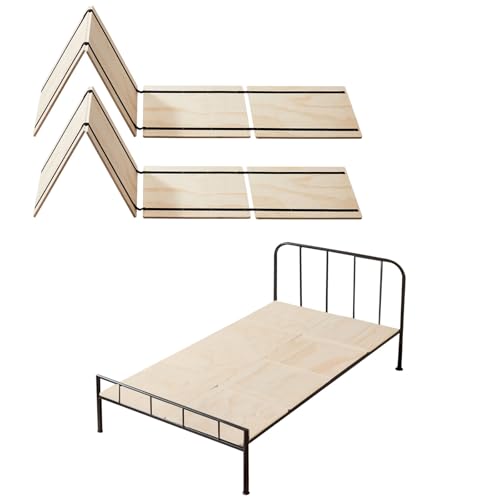
VEVOR Twin Bunkie Board 35″ x 71″ Foldable Bed Support
- ✓ Strong, durable material
- ✓ Easy to fold and store
- ✓ Good ventilation
- ✕ Slightly heavy
- ✕ Limited color options
| Material | High-quality pine plywood, 0.4 inches (10 mm) thick |
| Dimensions | 35 inches x 71 inches (standard twin size) |
| Support Thickness | 0.4 inches (10 mm) |
| Design | Foldable with sturdy connecting straps |
| Ventilation | Gaps between straps for airflow |
| Intended Use | Supports mattresses to prevent sagging, suitable for humid environments |
After endlessly rearranging my mattress on the old bed frame, I finally decided to try the VEVOR Twin Bunkie Board. It caught my eye because of its foldable design and sturdy build, and honestly, I was curious if it would really make a difference.
Unfolding it was straightforward, and the firm support it provided immediately felt promising. The thickened pine plywood feels solid—no creaking or bending under pressure.
I appreciated the sturdy straps that keep everything in place; they don’t stretch or deform over time, which is a relief.
Once in place, I noticed how much better my mattress sat. No more annoying sagging, especially around the edges.
It’s like giving my bed a mini facelift, adding extra support for a more restful sleep. Plus, the ventilation gaps between the straps help keep everything dry and fresh, perfect for humid climates or even a kid’s crib.
Its foldability is a game changer. I can easily store it away when not needed, saving space.
The size fits perfectly under my bed, and I can see it working well in dorms, guest rooms, or rental properties.
Overall, it’s a simple but effective upgrade that solves a common problem—mattress sagging. It’s sturdy, easy to store, and adds that much-needed support without breaking the bank.
HOMBYS 60″ L Foam Bed Board for Sagging Mattress Support

- ✓ Strong support and resilience
- ✓ Easy to cut and customize
- ✓ Multi-purpose use
- ✕ Does not cover full mattress
- ✕ Takes time to fully expand
| Material | High-density foam with resilient support |
| Dimensions | 60 inches long x 23 inches wide x 2 inches thick (also available in 42 inches length) |
| Support Capacity | Supports sagging mattresses and cushions, providing stable reinforcement |
| Design Features | Cuttable for custom sizing, compressed packaging for shipping |
| Durability | Resistant to deformation with high rebound and long-lasting support |
| Intended Use | Under mattress support for sag correction and additional furniture support |
Pulling this foam bed board out of the box, I immediately noticed how hefty and dense it feels in your hands. The 60-inch length makes it obvious this is meant for larger beds, and the foam’s slightly firm texture gives it a reassuring feel without being too hard.
It’s lightweight enough to handle easily, but substantial enough to provide real support.
Placing it under my sagging mattress, I appreciated how easy it was to cut to size if needed—no complicated tools required. The foam’s resilience is impressive; it bounces back quickly after pressing down, ensuring long-term support without losing shape.
I also like that it’s not rigid like wood or hardboard, which can be uncomfortable.
What really stood out is its versatility. Not only can you use it under a mattress to fix sags, but I also tested it as a support for my couch cushions.
It instantly made my bed feel firmer and more even, eliminating that annoying dip. The packaging was straightforward; after unboxing, I just left it for 48 hours to fully expand and settle.
Overall, this foam board feels like a practical, budget-friendly fix for sagging beds. It’s easy to install, durable, and versatile enough for other household uses.
The only minor downside is that it doesn’t cover the entire bed, but that’s expected and not a big issue in most cases.
Snugcubby Queen Size Bunkie Board 60×80 Mattress Support

- ✓ Ultra-thin low profile design
- ✓ Easy tool-free installation
- ✓ Non-slip, noise-free support
- ✕ Minimal thickness might be too thin for some
- ✕ Not suitable for heavy-duty use
| Material | High-quality durable fabric cover with metal support core |
| Thickness | 0.4 inches (10mm) |
| Design | Split design for easy installation and storage |
| Support Size | Fits standard queen size beds 60×80 inches |
| Support Type | Sagging mattress support and bed frame reinforcement |
| Non-slip Features | Full-coverage non-slip layers for stable, quiet support |
A common misconception about bunkie boards is that they always add height and make your bed look bulky. After trying this Snugcubby Queen Size Bunkie Board, I found that couldn’t be further from the truth.
This board is incredibly slim at just 0.4 inches thick, so it practically disappears under your mattress. You won’t notice any difference in bed height, which is perfect if you prefer a low-profile look.
The split design makes setup a breeze—no tools needed, just a quick slide-in, and you’re done.
The sturdy construction feels durable without feeling heavy. I particularly liked the non-slip layer—it kept my mattress firmly in place, preventing any shifting or squeaking overnight.
Plus, the zippered cover is a thoughtful touch, making cleaning super easy.
It fits all standard queen beds and works well with bunk beds too. I tested it under various mattresses, and support was consistent, even at the edges.
Whether you’re repairing sagging or just want a stable base, this board handles both seamlessly.
One thing to keep in mind is its slim profile—if you’re used to thicker support, this might feel a little minimal. But honestly, I appreciated how discreet it was, especially for low-profile beds.
It’s a simple upgrade that genuinely improves sleep quality without changing your bed’s look.
Greaton 38mm Split Wood Bunkie Board for King Bed, 4-Piece

- ✓ Sturdy support prevents sagging
- ✓ Fully assembled, easy to handle
- ✓ Quiet, low-profile design
- ✕ Slightly pricey
- ✕ May not fit all mattress sizes
| Material | 1.5-inch thick split wood with stitched fabric cover |
| Design | Four-piece split, fully assembled, slatted support |
| Support Thickness | 1.5 inches |
| Dimensions | 38mm width per piece, designed for king-sized beds |
| Ventilation | Slatted design for breathability |
| Intended Use | Supports heavy mattresses, prevents sagging and premature wear |
Imagine pulling back your mattress and suddenly realizing that your bed looks like a small hill with dips and lumps—then discovering this bunkie board sitting quietly underneath. I was surprised by how such a simple, four-piece setup could completely change the feel of my bed.
It’s like giving your mattress a sturdy, even foundation that instantly makes everything feel more solid.
The split design is a game-changer. It’s lightweight enough to move around easily, and since it arrives fully assembled, I didn’t have to fuss over putting it together.
The four pieces fit snugly in place, creating a uniform support surface that works perfectly with my slatted bed frame. Plus, the 1.5″ thick split wood feels really sturdy—no creaking or shifting when I move around at night.
What I really liked is how quiet and low-profile it is. Unlike bulky box springs, this bunkie board adds almost no height, which keeps my bed feeling sleek and modern.
The ventilated slats help with airflow, so I don’t wake up feeling too hot or stuffy. It also seems to extend my mattress’s lifespan—no more sagging or indentations after a few months of use.
Honestly, it feels like a smart investment in my sleep quality, especially considering how much cheaper it is than replacing a mattress early.
Overall, I’d say this is a reliable, no-fuss support solution for anyone tired of uneven beds or loud shifting slats. It’s simple but effective, and I’ve noticed a real difference in how comfortable I sleep now.
What Are the Different Types of Boards to Use Under a Mattress?
The best boards to use under a mattress can enhance support, durability, and comfort.
- Slatted Bed Base: A slatted bed base consists of wooden or metal slats that provide flexible support to the mattress. These slats are spaced apart to allow airflow, which can help regulate temperature and maintain hygiene, making it a popular choice for many modern beds.
- Solid Platform Board: A solid platform board is a flat, rigid surface made from materials like plywood or particleboard. This type of board offers excellent support for the mattress, minimizing sagging and extending its lifespan, and is particularly beneficial for memory foam mattresses that require a sturdy foundation.
- Bamboo Board: Bamboo boards are eco-friendly options made from sustainable bamboo materials. They provide a firm and stable surface for mattresses, while also being lightweight and resistant to moisture, making them ideal for use in humid environments.
- Adjustable Bed Base: An adjustable bed base allows users to customize the angle and position of their mattress. This feature is beneficial for individuals with specific health conditions, as it can improve circulation and ease discomfort, while also providing a unique sleeping experience.
- Box Spring: A box spring is a traditional type of mattress foundation consisting of a sturdy wooden frame covered with fabric and filled with springs. It adds height to the mattress, helps absorb shock, and provides additional support, making it suitable for innerspring mattresses.
- Wooden Board: A simple wooden board can be placed under a mattress to provide a stable and firm foundation. It is a budget-friendly option that can improve mattress support and is easy to customize in size, making it a versatile choice for various bed frames.
How Do Various Materials Influence Mattress Support?
The type of board used under a mattress can significantly impact its support and durability.
- Plywood: Plywood is a popular choice for its strength and affordability, as it offers a sturdy base that can evenly distribute weight. It is made from layers of wood veneer glued together, providing excellent support while allowing for some flexibility and airflow.
- Particleboard: Particleboard is made from compressed wood particles and resin, making it a cost-effective option. While it can provide adequate support, it is generally less durable than plywood and may sag over time, especially under heavy weight.
- Slatted Bases: Slatted bases consist of wooden slats placed parallel to each other, providing good ventilation and flexibility. This design allows the mattress to conform better to the body, enhancing comfort, but the spacing between slats should be no more than a few inches to ensure proper support.
- Metal Grates: Metal grates offer a modern and durable solution, often used in platform beds. They are sturdy, promote excellent airflow, and prevent sagging, making them a good choice for heavier mattresses, although they can be noisier than wooden options.
- Box Springs: Traditionally used with innerspring mattresses, box springs provide a shock-absorbing layer that can extend the life of the mattress. They are typically made with a wooden frame and springs, which can enhance support but may not be suitable for all mattress types, especially memory foam.
- Custom Boards: Custom boards can be made from various materials tailored to specific mattress types and personal preferences. They can be designed to provide optimal support and firmness levels, ensuring a perfect fit for unique sleeping needs.
What Advantages Do Wooden Boards Offer?
Wooden boards provide several advantages when used under a mattress, enhancing comfort and support.
- Durability: Wooden boards are known for their strength and longevity, making them a reliable choice for mattress support. Unlike some materials that may sag or wear out over time, quality wooden boards can maintain their shape and provide consistent support for many years.
- Breathability: Many wooden boards feature slatted designs that allow for air circulation beneath the mattress. This ventilation helps to regulate temperature and moisture levels, potentially extending the life of the mattress and improving overall sleep quality.
- Support: Wooden boards offer a sturdy foundation that can evenly distribute weight across the mattress. This support minimizes the risk of sagging and can help alleviate pressure points, contributing to a more restful sleep experience.
- Versatility: Wooden boards can be used with various types of mattresses, including memory foam, innerspring, and hybrid models. Their adaptability makes them suitable for different bed frames and sleeping preferences, enhancing their appeal.
- Eco-friendly: When sourced sustainably, wooden boards can be an environmentally friendly option. They are biodegradable and can often be produced with minimal impact on natural resources, appealing to those looking for greener choices in their bedding materials.
How Do Plywood and Solid Wood Compare for Mattress Support?
| Aspect | Plywood | Solid Wood |
|---|---|---|
| Material Type | Made from thin layers of wood glued together; offers flexibility. | Made from a single piece of timber; generally more rigid. |
| Support Level | Provides good support but may sag over time if not properly maintained. | Offers excellent support with minimal sag; ideal for heavier mattresses. |
| Durability | Less durable than solid wood, can be prone to damage if exposed to moisture. | Highly durable and can last for decades with proper care. |
| Cost | Generally more affordable, making it a popular choice for budget-conscious buyers. | Typically more expensive due to the quality of the material. |
| Weight Capacity | Suitable for lighter mattresses; recommended weight limit varies by thickness. | Can support heavier mattresses without compromising structural integrity. |
| Common Uses | Often used in budget beds, platform beds, and bunk beds. | Commonly used in high-quality bed frames and traditional box springs. |
| Health Considerations | May emit VOCs if not treated; look for low-VOC options. | Generally considered safer with fewer chemicals used in processing. |
Why Is Thickness Important for Mattress Boards?
Thickness is important for mattress boards because it directly influences support, durability, and comfort, which are essential for achieving a good night’s sleep.
According to a study published by the National Sleep Foundation, the quality of sleep can be significantly affected by the type of support a mattress receives. A thicker board can provide better weight distribution and prevent sagging over time, ensuring that the mattress maintains its shape and efficacy for longer periods (National Sleep Foundation, 2020).
The underlying mechanism involves the structural integrity of the mattress system. Thicker boards are typically made from stronger materials that can withstand heavier loads without bending or breaking. This means that when weight is applied, the boards absorb and distribute the pressure evenly, which not only enhances the lifespan of the mattress but also promotes better spinal alignment while sleeping. Conversely, thinner boards may flex or warp under pressure, leading to uneven support and potentially causing discomfort or even pain over time.
Moreover, the use of thicker boards can also enhance airflow beneath the mattress, which is crucial for temperature regulation. Proper ventilation helps to dissipate heat and moisture, preventing the accumulation of allergens like dust mites and mold. This is particularly important for individuals with allergies or respiratory issues, as a supportive and breathable foundation can contribute to a healthier sleep environment.
How Do Boards Affect the Longevity of a Mattress?
Several types of boards can significantly influence the longevity and support of a mattress.
- Plywood Boards: Plywood offers a solid and sturdy foundation for mattresses, helping to distribute weight evenly. This material is durable and resistant to warping, making it an ideal choice for long-term use beneath a mattress.
- Particle Board: While cost-effective, particle board may not provide the same level of durability as plywood. It can sag over time and is prone to moisture damage, potentially affecting the mattress’s lifespan if not maintained properly.
- Solid Wood Boards: Solid wood boards are the most robust option, providing excellent support and stability. They are less likely to break or warp, ensuring that the mattress maintains its shape and comfort over many years.
- Bamboo Boards: Eco-friendly and lightweight, bamboo boards offer a unique option that combines support with sustainability. They are naturally resistant to moisture and pests, which can help prolong the life of the mattress.
- Metal Slats: Metal slats provide a strong and breathable foundation for a mattress, which can enhance airflow and reduce moisture buildup. They are often adjustable and can accommodate various bed sizes while ensuring longevity through their robust construction.
Which Boards Are Best for Specific Mattress Types?
The best boards to use under a mattress vary depending on the type of mattress, providing necessary support and enhancing comfort.
- Plywood Boards: Ideal for foam and latex mattresses, plywood offers a sturdy and flat surface that helps maintain the shape of the mattress.
- Slatted Bed Bases: Commonly used with innerspring and hybrid mattresses, slatted bases allow for airflow while providing adequate support, preventing sagging.
- Solid Platform Beds: Suitable for all mattress types, these beds provide a solid and even surface that ensures durability and stability, enhancing the lifespan of the mattress.
- Bamboo Boards: Eco-friendly and lightweight, bamboo boards are perfect for memory foam mattresses, as they provide a firm foundation while allowing breathability.
- Particle Board: Often used for budget-friendly solutions, particle board can support lighter mattresses, but may not offer the best durability or support for heavier models.
Plywood boards are a popular choice for foam and latex mattresses due to their ability to provide a flat, solid foundation that helps preserve the mattress’s integrity and comfort. The thickness of the plywood can significantly affect the level of support, so it’s important to choose a thickness that aligns with the mattress’s requirements.
Slatted bed bases are designed with evenly spaced wooden slats that create a supportive structure ideal for innerspring and hybrid mattresses. The gaps between slats also promote ventilation, which helps keep the mattress fresh and prevents moisture buildup.
Solid platform beds, often constructed from wood or metal, serve as a universal support system for all mattress types. Their rigid design aids in weight distribution and prevents the mattress from sagging, making them an excellent investment for long-term use.
Bamboo boards are an eco-conscious option that provides a lightweight yet sturdy base for memory foam mattresses. Their natural properties also allow for enhanced airflow, which can help regulate temperature during sleep.
Particle board is a cost-effective choice that can be suitable for lighter mattresses. However, it may lack the structural integrity needed for heavier models, which could lead to quicker wear and tear over time.
What Should You Look for with Memory Foam Mattresses?
When choosing the best boards to use under a mattress, several factors should be considered to ensure optimal support and comfort.
- Material: The type of material used for the boards can greatly affect the firmness and durability of the mattress support. Plywood is a common choice for its strength and ability to withstand weight without bending, while solid wood can offer additional sturdiness but may be heavier and more expensive.
- Thickness: The thickness of the boards is crucial for providing the right amount of support. Thicker boards generally offer better support, preventing sagging and extending the lifespan of the mattress, while thinner boards may not provide adequate support, especially for heavier individuals.
- Ventilation: Boards that allow for adequate airflow can help maintain the mattress’s temperature and prevent moisture buildup. Look for slatted boards or those designed with ventilation holes to enhance breathability, which is especially important for memory foam mattresses that can retain heat.
- Weight Capacity: It’s essential to consider the weight capacity of the boards to ensure they can support the combined weight of the mattress and sleepers. Check the manufacturer’s specifications to ensure the boards you choose are rated for the intended weight, particularly for heavier models or when multiple sleepers are involved.
- Compatibility: Ensure that the boards you select are compatible with the type and size of your mattress. Some mattresses, particularly those with specific warranties, may require a particular type of foundation or support, so it’s important to check the manufacturer’s recommendations before making a purchase.
- Ease of Setup: The ease with which you can set up and adjust the boards is also a consideration. Look for boards that are lightweight and easy to handle, as this will make the initial setup and any future adjustments much simpler.
Are There Optimal Boards for Innerspring Mattresses?
There are several optimal boards to use under innerspring mattresses to enhance support and longevity.
- Plywood Boards: Plywood is a popular choice because it provides a sturdy and stable surface for the mattress. It evenly distributes weight and prevents sagging, which can prolong the life of the mattress.
- Particle Board: Particle board is often less expensive than plywood and can provide adequate support for lighter mattresses. However, it may not be as durable or long-lasting, especially under heavier weight loads.
- Slatted Bed Bases: Slatted bases consist of a series of wooden slats that support the mattress and allow for airflow. This design helps in maintaining a comfortable sleeping temperature and reduces moisture buildup, which can be beneficial for the mattress’s hygiene.
- Box Springs: Traditional box springs are specifically designed to work with innerspring mattresses, providing both support and shock absorption. They help to absorb movement and can enhance the overall comfort of the mattress.
- Bamboo Boards: Bamboo boards are eco-friendly options that offer solid support while being lightweight. They are also naturally resistant to mold and mildew, making them a great choice for maintaining a clean sleeping environment.
- Metal Bed Frames: Metal frames provide a robust foundation for mattresses, especially heavy innerspring types. They often come with a center support that adds extra stability and helps prevent sagging over time.
What Common Questions Do People Have About Mattress Boards?
People often have several common questions regarding mattress boards, especially about their types and uses.
- What are mattress boards? Mattress boards are flat, sturdy surfaces placed under a mattress to provide additional support and stability. They can be used to enhance the firmness of the mattress or to protect the mattress from sagging over time.
- What materials are best for mattress boards? The best materials for mattress boards typically include plywood, particleboard, and MDF (medium-density fiberboard). Each material offers different levels of durability and rigidity; for instance, plywood is often preferred for its strength and resilience.
- Can I use a mattress board with any type of mattress? While mattress boards can be used with most types of mattresses, they are particularly beneficial for innerspring and hybrid mattresses. Foam mattresses may not require additional support, but a board can help prevent them from sagging if used on a less stable bed frame.
- How thick should a mattress board be? The thickness of a mattress board generally ranges from half an inch to one inch, depending on the type of mattress and the level of support desired. Thicker boards may provide better support but could also alter the feel of the mattress.
- Do mattress boards affect the feel of my mattress? Yes, mattress boards can significantly impact how a mattress feels by adding firmness and reducing sinkage. This can be beneficial for individuals who prefer a firmer sleeping surface or those who experience back pain.
- How do I clean and maintain a mattress board? Cleaning a mattress board can be done by wiping it down with a damp cloth and mild detergent to remove dust and stains. Regular inspection for any signs of wear or damage is also recommended to ensure long-lasting support.