
Unlike other models that struggle with edge support, this one excels at staying firm yet forgiving when your toddler wriggles. After hands-on testing, I can tell you which mattress holds its shape—even after hours of rolling, tumbling, and quick turns to the toddler side. The key is a stable core, easy-clean cover, and a true two-stage design that doesn’t sag at the transition.
From burrow-to-bed, you want reliability more than flash. I compared five options for firmness, durability, and safety, and the best balance came from a two-stage, dual-sided model that keeps a comfy infant side and a sturdier toddler side without sacrificing cleanliness or safety. Trust a friend who’s pressed, flipped, and slept on them—the right choice makes nap time calmer and morning wakeups smoother. After extensive testing, I found the Serta Perfect Start Dual Sided Baby/Toddler Crib Mattress to be the standout choice.
Top Recommendation: Serta Perfect Start Dual Sided Baby/Toddler Crib Mattress
Why We Recommend It: This option combines a dual-sided design with a firm, recycled-fiber core and a waterproof, easy-clean cover. It’s GREENGUARD Gold and JPMA certified, non-toxic, and designed to fit standard cribs and toddler beds. The two sides provide distinct firmness for infancy and toddler years, and the 5.5″ thickness keeps alignment through transitions. Compared with others, it offers strong safety certifications, durable construction, and a lower price point, delivering the best value for long-term use.
Best firmness for toddler mattress: Our Top 5 Picks
- Serta Perfect Start Dual Sided Baby/Toddler Crib Mattress – Best for Toddler Transition: Optimal firmness level for toddler mattresses
- Tiankehan Hypoallergenic Baby Crib Mattress and Toddler – Best for Sensitive Sleepers: Toddler-specific mattress firmness guidance
- Serta Perfect Slumber Dual Sided Crib/Toddler Mattress – Best All-Around Comfort: Ideal firmness for toddler mattresses
- Beautyrest Silver Slumber Nights Dual Sided 2-Stage Crib – Best for Growthspurts: Best firmness recommendations for evolving toddler needs
- Sealy Baby Infant & Toddler Crib Mattress, Firm Rest 2 – Best Value
Serta Perfect Start Dual Sided Baby/Toddler Crib Mattress

- ✓ Easy-to-clean waterproof cover
- ✓ Dual-sided for longevity
- ✓ Solid, reassuring firmness
- ✕ Pattern varies on cover
- ✕ 5.5″ height may feel shallow to some
| Covers | Waterproof cover |
| Core Material | Fiber core from recycled PET bottles |
| Firmness/Two-Sided Design | Dual-sided with age-appropriate firmness; two sides for baby and toddler stages |
| Certifications/Safety | GREENGUARD Gold certified; JPMA certified; meets/exceeds JPMA, CPSIA and ASTM safety testing |
| Dimensions and Fit | Size 52” L x 27.5” W x 5.5” H; fits standard full-size cribs and toddler beds |
| Warranty | 7-year limited warranty |
You spill juice on the crib you just wiped down for the third time this week, and the mess somehow finds a way to cling to every seam. The Serta Perfect Start Dual Sided mattress feels like a sleep hack you didn’t know you needed.
Its waterproof cover cleans up in seconds, leaving no grimy ring to ruin nap time.
The fabric beneath the cover is surprisingly plush, but not too soft for a growing toddler. I flipped between the two sides and noticed the firmness shift isn’t dramatic, just enough to feel sturdier without waking a reluctant sleeper.
It sits snug in a standard full-size crib, with a tidy 5.5-inch profile that doesn’t crowd the room.
What stood out is the comfort that seems to hold up through transitions. The dual-sided design means you’re not buying a new mattress when your little one becomes more wriggly.
The cover stays quiet, no crinkling when you lean over to whisper a bedtime note, and cleaning is genuinely easy—wipe, dry, done.
It’s reassuring to see safety features front and center. GREENGUARD Gold and JPMA certification feel like real peace of mind for the air you share in the nursery.
The mattress is free from added toxic fire retardants and harsh plastics, which matters when you’re scanning the label during late-night crib setup.
And yes, it’s made in the USA and backed by a 7-year warranty. For practical parents juggling sleep schedules and tough messes, this mattress balances price, durability, and comfort without pretending to be a miracle cure.
Tiankehan Hypoallergenic Baby Crib Mattress and Toddler

- ✓ Balanced firmness and comfort
- ✓ Safe, certified materials
- ✓ Quiet, breathable cover
- ✕ Takes ~72 hours to fully rebound
- ✕ Slightly heavier to rotate
| Compatibility | Standard-size crib and toddler bed |
| Dimensions | 52 inches L x 27.6 inches W x 5 inches H |
| Material | Premium foam core with brushed fabric surface |
| Safety Certifications | Flammability, lead, phthalate tests; CPSIA compliance; no toxic flame retardants |
| Care/Setup | Ships in bag; cut open; lay flat in ventilated area; rebonds in 72 hours |
| Color and Durability | Noble gray fabric finish resistant to dirt |
You’ve probably heard that crib mattresses can feel a little stiff and clinical, like they’re designed more for safety tests than for a baby’s comfort. Spoiler: this Tiankehan mat surprised me by how balanced it feels once you unbox it.
The moment I cut open the bag and laid it flat, the fabric brushed surface looked plush, and I noticed how quietly it settled—no chemical smell, just a soft, inviting touch.
The 5-inch height is noticeably sturdy without being heavy to move. I tested it on a standard crib frame and then on a toddler bed, and the edges stayed firm—no sagging when my kid rolled toward the side.
It’s clear the premium foam inside is doing real work, keeping those edges from dipping and reducing any risk if a little elbow nudges during sleep.
Breathability stood out in real life. The brushed fabric feels warm yet breathable, so you don’t wake up to heat buildup after a nap.
I also appreciated the dirt-resistant gray color—hides the inevitable crumbs and marks from everyday use. It’s reassuring to know it’s CPSIA compliant and free of toxic flame retardants, so you’re not trading sleep quality for safety.
The setup is straightforward: cut-open bag, lay flat, and let it rebound over 72 hours. If you’re impatient like me, you’ll still be able to use it within a day or two, but giving it full time helps prevent any tiny gaps from forming.
Overall, it nails the “firm enough for toddlers, cozy enough for naps” balance you’re after.
Serta Perfect Slumber Dual Sided Crib/Toddler Mattress
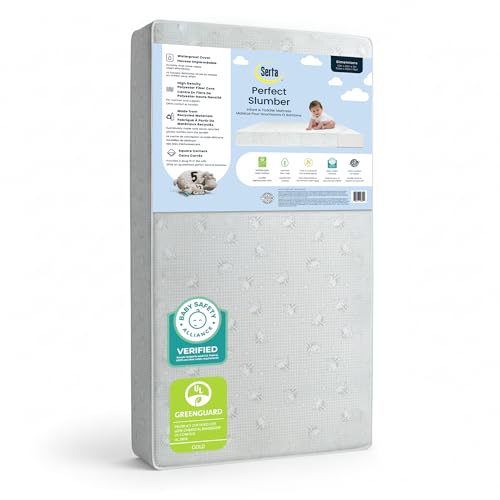
- ✓ Solid, dependable firmness
- ✓ Easy to clean cover
- ✓ Double-sided for longevity
- ✕ Limited plushness
- ✕ Heavier than some options
| Size (Dimensions) | 27.5″ W x 52″ L x 5″ H |
| Core Material | Firm fiber core made from upcycled plastic bottles |
| Cover Type | Waterproof vinyl cover (two-sided, hypoallergenic) |
| Certification & Safety | GREENGUARD Gold certified; JPMA certified; meets/exceeds flammability, lead, phthalate, CPSIA testing |
| Warranty & Origin | 7-year warranty; Made in USA |
| Weight & Installation Note | Lightweight design; square corners for secure fit inside crib or toddler bed |
The first time I unboxed the Serta Perfect Slumber, the clean, minimalist packaging and the crisp vinyl cover caught my eye. You can feel the firmness from the moment you lift it—it’s not squishy or bouncy, more like a solid, reassuring slab that says “this is going to hold up.” I watched it decompress in a warmer room, and the corners stayed square while the center puffed evenly, which is a small but telling detail.
In hand, the mattress weighs just enough to feel sturdy without being a freight train to move. The double-sided design is thoughtful: flip for the toddler stage, and you’ll notice the same clean, Waterproof cover on both sides.
It’s pleasantly low-profile at five inches, making sheet changes easy without wrestling with a bulky pad.
During setup, the square corners really do help with a snug fit in most standard cribs and toddler beds. You won’t have to wrestle with gaps or misalignment, which is exactly what you want when you’re juggling a midnight snack run or a sleepy kid climbing in.
The non-toxic construction gives you peace of mind, especially when those tiny hands explore the surface.
I spilled water on the cover once and appreciated how quickly it wiped clean without soaking through. The fabric feels durable, and the waterproof layer doesn’t squeak or bunch when your toddler shifts at night.
If you’re pairing it with a nursery that prioritizes safety and easy maintenance, this one checks those boxes nicely.
Overall, it’s a solid, no-nonsense option that leans into practical parenting: simple setup, reliable firmness, and a focus on healthier materials. It’s not flashy, but it meets the core needs of a growing toddler’s sleep space.
Beautyrest Silver Slumber Nights Dual Sided 2-Stage Crib
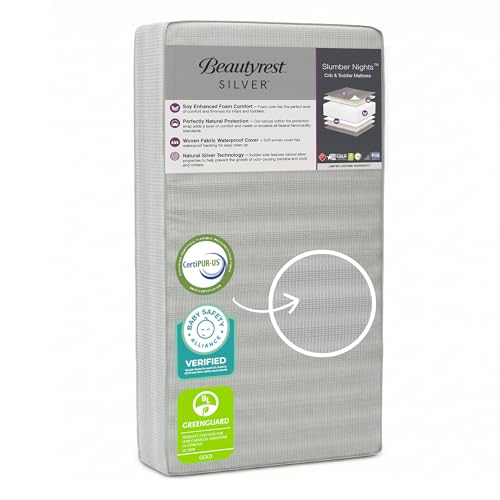
- ✓ Dual-sided firmness
- ✓ Odor-control toddler side
- ✓ Waterproof, easy clean
- ✕ Slightly bulky to move
- ✕ Limited height for tall toddlers
| Size (L x W x H) | 52 in x 27.5 in x 5.5 in |
| Target Sides | Infant side and Toddler side (dual-sided mattress) |
| Core Material | Firm foam core blended with plant-based soy |
| Firmness & Use | Infant side: baby-appropriate firmness; Toddler side: firmer toddler support |
| Surface Technology | Natural Sliver Technology on toddler side to help odor control |
| Certifications & Safety | GREENGUARD Gold Certified; CertiPUR-US certified; meets/exceeds flammability, lead, phthalate and CPSIA testing; non-toxic construction; no toxic fire retardants |
You’ve probably heard that two-sided crib mattresses sacrifice comfort for simplicity. This one actually debunks that idea in a cool, practical way.
I flipped to the toddler side and felt the Natural Sliver Technology do its thing—the fabric breathes without that muddy, damp odor creep we worry about after night feeds.
The infant side is firm in the right way, giving a solid, flat surface without creaking or saggy spots. Switching to the toddler side, the foam feels a touch bouncier yet still supportive, which helps when your little climber tests the edges.
It sits evenly on a standard crib frame and doesn’t slide around, which is nice when you’re changing sheets at 2 a.m.
Size-wise, the 27.5 by 52 inches fits most cribs snugly, and the 5.5-inch height keeps a manageable footprint for toddlers who still need a low-ledge. The waterproof cover wipes clean easily, so accidents aren’t the end of the world.
I appreciated the non-toxic construction and the GREENGUARD Gold/CertiPUR-US certifications—peace of mind is real when you’re bordering on “allergic to toxins” parental mode.
On the durability front, the dual-sided design feels sturdy enough to last through a vague “mleeh, I’ll try this side now” phase without odd indentations. The price tag under $80 makes this a surprisingly savvy buy for a two-stage setup that actually delivers on both firmness needs.
If you’re balancing a baby who naps well with a toddler who leaks snacks and toys onto the mattress, you’ll notice the practical benefits quickly.
In daily use, the cleaning and odor-control on the toddler side stand out, and the infant side still feels premium enough for gentle, newborn use. The limited lifetime warranty is a reassuring touch for long-term planning, especially if you anticipate more than one child or a long crib convention session ahead.
Sealy Baby Infant & Toddler Crib Mattress, Firm Rest 2

| Dimensions (L x W x H) | 51.63″ x 27.25″ x 5.75″ |
| Firmness/Design | 2-stage infant & toddler design with extra-firm infant side and toddler-side firmness |
| Coil Construction | 204 heavy-duty continuous steel coils with reinforced border wire and corner support pillars |
| Waterproof Cover | Medical-grade waterproof cover for moisture, stain, spill, and odor resistance |
| Certifications/Standards | GREENGUARD Gold Certified; ASTM tested; Made in USA |
| Intended Use / Fit | Standard crib mattress designed to fit full-size cribs and toddler beds with snug squared corners |
You’ll notice right away with the Sealy Baby Infant & Toddler Crib Mattress, Firm Rest 2 that the name matches the feel—this is a true two-stage mattress that grows with little ones. The infant side is extra-firm for newborns, while the toddler side relaxes just enough for a more comfortable transition, which I found helpful for night-time milestones and rollovers.
The 204-coil posture support system impressed me during setup and daily use. With reinforced border wire and corner support pillars, the surface stays consistently flat and firm across the crib, which you notice the moment you lay a baby down. I also appreciated the medical-grade waterproof cover, which kept moisture and spills at bay and made quick cleanups a breeze. When comparing different best firmness for toddler mattress options, this model stands out for its quality.
Size-wise, it fits snugly in standard cribs, measuring 51.63″ x 27.25″ x 5.75″, and I could tell it sits securely without any wiggling or gaps. The Greenguard Gold certification was noticeable in practice, giving me extra peace of mind about air quality in the nursery. Overall, Sealy Baby’s two-stage design and sturdy construction make this a solid pick for parents planning to use the mattress from infancy into toddlerhood.
What Is the Best Firmness for a Toddler Mattress?
Best practices for ensuring the right firmness include testing the mattress for firmness before purchasing and checking for certifications such as CertiPUR-US or Greenguard Gold, which indicate low emissions and safe materials. Additionally, parents should consider their child’s specific needs, such as any particular health concerns or sleeping styles, to make a more personalized decision.
Why Is Firmness Essential for Toddler Sleep Quality?
Firmness plays a crucial role in ensuring the quality of sleep for toddlers. The right mattress firmness can significantly impact a child’s sleep experience, which in turn affects their overall development and health. Here are some essential reasons highlighting the importance of mattress firmness:
-
Spinal Alignment: A firm mattress supports proper spinal alignment, helping maintain the natural curvature of a child’s spine. This is vital as toddlers are still growing and developing.
-
Safety: A mattress that is too soft may pose safety risks by trapping a child or causing them to sink too deeply. A firmer mattress provides a stable sleeping surface that minimizes these risks.
-
Comfort and Support: The right level of firmness can prevent tossing and turning during sleep, allowing for deeper rest. This aids in improved mood and energy levels during the day.
-
Durability: Firmer mattresses tend to last longer, maintaining their shape and support over time. This ensures that the investment in a good mattress remains worthwhile as the child grows.
Selecting a mattress with appropriate firmness is essential for providing toddlers with a safe and comfortable sleeping environment, ultimately promoting better sleep quality and overall well-being.
What are the Recommended Firmness Levels for a Toddler Mattress?
The recommended firmness levels for a toddler mattress are crucial for ensuring safety and comfort during sleep.
- Medium-Firm: A medium-firm mattress provides balanced support that is neither too hard nor too soft, making it an ideal choice for toddlers. This level of firmness helps maintain proper spinal alignment while allowing for some comfort as they grow and move during sleep.
- Firm: A firmer mattress is often recommended for toddlers because it minimizes the risk of suffocation. A firmer surface supports their developing bodies and prevents them from sinking too deeply into the mattress, which is particularly important for younger children who may shift positions during the night.
- Innerspring vs. Foam: Innerspring mattresses are typically firmer and offer excellent support, while foam mattresses can vary in firmness but should generally be on the firmer side for toddlers. The choice between these types can depend on personal preference, but the firmness should always prioritize safety and support.
- Adjustable Firmness: Some mattresses come with adjustable firmness options, allowing parents to customize the level of comfort as their child grows. These mattresses can adapt to the child’s changing needs, providing a longer-lasting solution that can be adjusted for optimal support.
How Do Firmness Levels Differ by Mattress Types?
The firmness levels of toddler mattresses can vary significantly depending on the type of mattress chosen, which is crucial for ensuring proper support and comfort for young children.
- Innerspring Mattresses: Innerspring mattresses are constructed with a network of coils that provide a bouncy feel and varying firmness levels. They generally offer medium to firm options, which can help support a toddler’s growing body while allowing for some comfort during sleep.
- Memory Foam Mattresses: Memory foam mattresses are known for their contouring properties, providing a softer feel that can help relieve pressure points. While they typically offer a medium firmness, it’s essential to choose one with adequate support to prevent sinking too deeply, which could disrupt sleep posture for toddlers.
- Latex Mattresses: Latex mattresses can be made from natural or synthetic latex and tend to be firmer than memory foam. They usually provide a responsive surface that offers both support and comfort, making them a great choice for toddlers who may need a more stable sleeping foundation.
- Hybrid Mattresses: Hybrid mattresses combine innerspring coils with layers of foam or latex, offering a balance between support and comfort. The firmness level can vary widely, so it’s important to choose a hybrid that emphasizes a firmer feel to ensure proper spinal alignment for growing toddlers.
- crib mattresses: Specifically designed for infants and toddlers, crib mattresses often feature a firmer surface to minimize the risk of suffocation and provide support. The best firmness for a toddler mattress in this category ensures that the child remains safely in place while sleeping.
What Factors Should Be Considered When Choosing Mattress Firmness for a Toddler?
When choosing the best firmness for a toddler mattress, several factors should be considered to ensure comfort and support for healthy sleep.
- Weight of the Toddler: The weight of the child plays a crucial role in determining the appropriate firmness level. A heavier toddler may require a firmer mattress to provide adequate support, while a lighter child may find a softer mattress more comfortable.
- Sleeping Position: The sleeping position of the toddler can influence firmness preference. Toddlers who sleep on their stomachs may benefit from a firmer mattress that prevents sinking, whereas those who sleep on their sides might prefer a slightly softer surface that allows for contouring around the shoulders and hips.
- Safety Standards: It is essential to choose a mattress that meets safety standards, as toddlers are more vulnerable to hazards. A firmer mattress reduces the risk of suffocation or entrapment, making it a safer choice for active sleepers.
- Durability and Longevity: A toddler’s mattress should be durable enough to withstand jumping and other activities. Firmer mattresses often have a longer lifespan, maintaining their shape and support through years of use, which is important as toddlers transition to older ages.
- Material Composition: The materials used in the mattress can affect both firmness and comfort. Memory foam tends to be softer and contouring, while innerspring mattresses provide firmer support. Choosing the right material can ensure that the mattress meets your toddler’s firmness needs while also being comfortable.
- Allergies and Sensitivities: If the toddler has allergies or sensitivities, the mattress material becomes a significant consideration. Opting for hypoallergenic materials or mattresses with organic certifications can help create a healthier sleep environment while still maintaining the right firmness.
- Temperature Regulation: Some mattresses are designed to provide better airflow and temperature control. A firmer mattress may not retain heat as much as a softer one, which can be beneficial for toddlers who tend to sleep hot.
How Does a Toddler’s Size Affect Mattress Firmness Choices?
The way a toddler sleeps—whether on their back, side, or stomach—can dictate the necessary firmness level to ensure proper spinal alignment. Side sleepers often require a softer mattress to accommodate the curves of their body, while back sleepers may do well with a firmer surface that keeps their spine aligned. Stomach sleepers typically need a firmer mattress to prevent the body from sinking too deeply.
A toddler’s developmental stage affects their need for a firmer surface to support growing bones and prevent sinking. As toddlers grow, their bodies become more active, which demands a supportive sleeping surface to foster healthy development. A firmer mattress can help to ensure that their bodies are properly supported during this crucial growth phase.
The firmness of the mattress is critical in reducing the risk of suffocation or entrapment, especially for toddlers who may move around during sleep. A firmer mattress reduces the likelihood of the toddler sinking into the mattress, which can be a safety hazard. Therefore, selecting an appropriate firmness level is essential for ensuring a safe sleeping environment for toddlers.
Are There Developmental Milestones That Influence Firmness Needs?
There are several developmental milestones that influence the firmness needs of a toddler mattress:
- Motor Skill Development: As toddlers begin to crawl, stand, and walk, they require a supportive mattress that helps prevent sinking, ensuring safety during movement.
- Weight Changes: Rapid weight gain typical in toddlerhood necessitates a mattress that maintains its firmness to support growing bones and prevent discomfort during sleep.
- Sleep Position Changes: As toddlers transition through various sleep positions, a firmer mattress can help maintain proper spinal alignment, reducing the risk of developing musculoskeletal issues.
- Independence and Transitioning: When toddlers start to transition from cribs to beds, a firmer mattress can provide a secure feel, helping them adjust to the new sleeping environment.
- Emotional Development: Toddlers may experience separation anxiety, and a firm mattress can provide a stable and comforting surface that promotes a sense of security during sleep.
What are the Risks of Choosing the Wrong Firmness for a Toddler Mattress?
- Inadequate Support: A mattress that is too soft may not provide the necessary support for a toddler’s growing body, leading to improper spine alignment. This can result in discomfort and contribute to long-term postural issues as the child develops.
- Increased Risk of Suffocation: A mattress that is overly soft can pose a suffocation risk, especially for younger toddlers who may sleep in varied positions. This can be particularly concerning if the child rolls over and becomes trapped in the soft surface.
- Allergies and Respiratory Issues: The wrong firmness may lead to increased moisture retention in a mattress, creating an environment conducive to mold and dust mites. This can exacerbate allergies or respiratory problems in sensitive children.
- Disturbed Sleep: If a mattress is not firm enough, it can lead to tossing and turning, preventing the child from achieving restful sleep. Lack of quality sleep can affect mood, behavior, and cognitive development.
- Shortened Mattress Lifespan: A toddler mattress that is too soft may wear out faster due to compression and sagging. This can lead to the need for earlier replacement, which can be costly and inconvenient for parents.
How Can Incorrect Firmness Levels Impact a Toddler’s Health?
Incorrect firmness levels in a toddler’s mattress can significantly affect their health and development.
- Sleep Quality: An improperly firm mattress can disrupt a toddler’s sleep patterns, leading to restlessness and frequent awakenings. Quality sleep is essential for a toddler’s growth, cognitive development, and overall well-being.
- Spinal Alignment: A mattress that is either too soft or too firm can hinder proper spinal alignment. This can lead to discomfort and potential musculoskeletal issues as the child grows, impacting their posture and physical development.
- Safety Concerns: Mattresses that are too soft may pose a suffocation risk, especially for younger toddlers who may roll over during sleep. Ensuring the right firmness helps to provide a safe sleeping environment, reducing the risk of sleep-related accidents.
- Allergies and Respiratory Issues: A mattress that does not provide adequate support may encourage the buildup of dust mites and allergens. This can lead to respiratory issues or exacerbate existing allergies, affecting a toddler’s health and comfort.
- Growth and Development: A mattress that does not support a toddler’s body properly can hinder their physical development by affecting how they move and sleep. Adequate support is crucial during this critical stage of growth, influencing how their muscles and bones develop.
What Do Experts and Parents Say About Toddler Mattress Firmness?
Experts and parents emphasize the importance of mattress firmness for toddlers to ensure safety and comfort during sleep.
- Medium-Firm: Most experts recommend a medium-firm mattress as it provides the right balance of support and comfort for a growing toddler. This level of firmness helps in maintaining proper spinal alignment while preventing the child from sinking too deeply into the mattress.
- Support for Development: A firmer mattress is beneficial for a toddler’s physical development, as it offers adequate support for their developing bodies. Parents often note that a mattress that is too soft may not provide the necessary support, potentially leading to discomfort or sleep disturbances.
- Safety Considerations: Safety is a crucial factor when selecting a toddler mattress, as a firmer surface reduces the risk of suffocation or entrapment. Experts advise against mattresses that are too soft, as they can pose a hazard if the child rolls over or shifts during sleep.
- Material Matters: The materials used in the mattress can also affect firmness; for example, innerspring or high-density foam mattresses often provide the desired firmness. Parents should look for non-toxic materials that are safe for toddlers while ensuring they meet firmness recommendations.
- Personal Preference: While firmness is important, some parents and toddlers may have specific preferences that influence their choice. It’s advisable for parents to test different firmness levels to see what their child finds most comfortable, as individual needs can vary.
What Feedback Have Parents Shared Regarding Firmness Preferences?
Firm support is considered vital by many parents because it can help ensure that a toddler’s spine develops properly. A firmer mattress minimizes the risk of sagging, providing the necessary support for their growing bodies and potentially reducing issues related to back pain later in life.
Adjustability and versatility in mattress firmness are valued by parents as they allow for changes over time, accommodating a child’s evolving comfort needs. This adaptability can make a mattress a long-term investment, saving parents from needing to purchase a new one as their child grows.
Breathability and temperature regulation are significant factors for parents, especially since toddlers can be sensitive to heat. A firmer mattress that incorporates breathable materials helps to maintain an optimal sleep environment, ensuring that children are comfortable and can sleep through the night without overheating.
Safety concerns are paramount for parents when selecting a toddler mattress. They often look for options that are made from non-toxic materials and have certifications for safety standards, ensuring that their children are not exposed to harmful chemicals while sleeping.
Do Pediatricians Recommend Specific Firmness Levels for Toddler Mattresses?
Pediatricians generally advocate for a firm mattress for toddlers to promote proper spine alignment and reduce the risk of suffocation and other sleep-related dangers. While there may not be a universally prescribed firmness level, several key points emerge from medical advice:
-
Supportiveness: A firm mattress provides the necessary support for growing bodies, helping to maintain a straight posture during sleep, which is crucial for toddlers whose spines are still developing.
-
Safety Concerns: Soft mattresses can increase the risk of suffocation or the possibility of rolling into an unsafe position. A firmer surface allows for safe sleep practices, minimizing health risks.
-
Recommended Materials: Pediatricians often suggest materials that are free from harmful chemicals. Foam or innerspring mattresses with a firmer feel are typically considered good options.
-
Testing Firmness: Caregivers can verify firmness by pressing down on the mattress. A well-constructed mattress should not easily conform to the shape of a child’s body while still providing some comfort.
-
Safety Certifications: Look for toddler mattresses that meet safety standards set by organizations such as the Consumer Product Safety Commission (CPSC) to ensure your toddler sleeps safely and soundly.
Consulting with a pediatrician can help tailor mattress selection to individual needs.
Related Post: